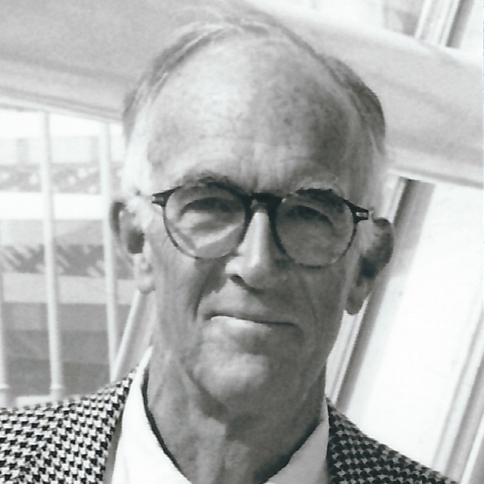
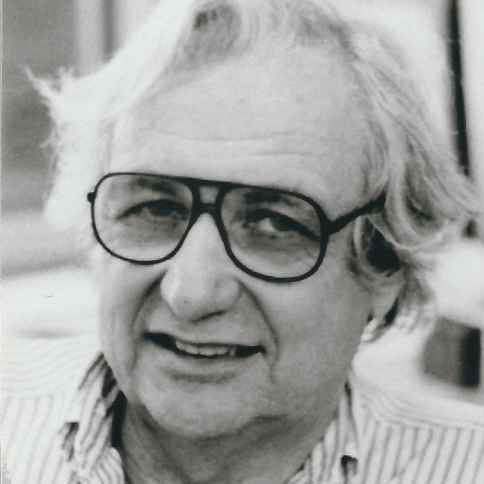
Jacques Tits

Wolf Prize Laureate in Mathematics 1993

Jacques Tits


Affiliation at the time of the award:

College de France, France


Award citation:

“for his pioneering and fundamental contributions to the theory of the structure of algebraic and other classes of groups and in particular for the theory of buildings”.


Prize share:

Jacques Tits 

Mikhael Gromov


Professor Jacques Tits has made many fundamental contributions to the theory of groups and their interactions with geometry. He has developed the theory of buildings as a central organizing principle and powerful tool for an astonishingly wide range of problems in group theory and geometry. This is a geometric approach to group theory which applies to finite groups, to p-adic groups and to arithmetic groups and has been instrumental in many of the most important advances in the last twenty years. Conversely his work also makes use of group theory to make possible many profound contributions to geometry, both by Tits and others. Some of these were areas for which it was not originally designed, such as the theory of Riemannian spaces of rank exceeding 1. Tits ideas are now an essential ingredient in the arsenal of every geometer. Tits has also made many other important contributions to those parts of mathematics listed above, to the theory of Coxeter groups, of Lie groups and of Kac-Moody algebras. The work of Tits has enriched mathematics enormously and has opened the path for numerous further developments.

Denys Lasdun

Wolf Prize Laureate in Architecture 1992

Sir Denys Lasdun


Award citation:

“With architecture as a social art, he enhances the relations between people through primary architectural means that far transcend style”.


Prize share:

Denys Lasdun

Frank O. Gehry 

Jorn Utzon


Although each deserves the prize alone, it was felt that their creative stature would be identified best through comparison; even through the actual contrast of diverse and opposite qualities. Three men, three leaders, three permanent references in the wavering research of modern architecture. Humanly, psychologically and in their forms, they are very different. But they have one thing in common: the consistency of looking for ever extended fields of freedom.

Sir Denys Lasdun has produced an architecture of extraordinary consistency, in which each building is thought of as a piece of a larger urban landscape. This is an oeuvre which demonstrates how it is possible to achieve individuality while also extending lessons from nature and tradition. With works such as the Royal College of Physicians, the University of East Anglia or the project for the Hurva Synagogue, Lasdun has been able to enhance and ennoble the relations between people through primary architectural means that far transcend style.

Three architects, three architectural languages, three different positions in space, time and architectural tradition – but three reminders as well in a period which suffers from the facile reuse of images, that the art of architecture can aspire to qualities existing well beyond the range of passing fashion – qualities that enhance use, transform construction, intensify meaning and liberate the mind.

M. Judah Folkman

Wolf Prize Laureate in Medicine 1992

M. Judah Folkman


Affiliation at the time of the award:

Harvard Medical School, USA


Award citation:

“for his discoveries which originated the concept and developed the field of angiogenesis research”.


Prize share:

None


M. Judah Folkman (born in 1933, USA) knew he wanted to become a doctor from the age of 7. He earned his undergraduate degree from Ohio State University in 1953 and later graduated from Harvard Medical School in 1957. During his time at Harvard Medical School, he underwent training under Robert Edward Gross. Following his graduation, he started his surgical residency at Massachusetts General Hospital.

Professor M. Judah Folkman’s hypothesis that solid tumors are angiogenesis dependent and his subsequent discoveries led to the development of the field of angiogenesis research. He and his associates developed the methodology by which angiogenesis is studied, including the first cloning and culture of capillary endothelial cells, the first in vivo bioassays and the first demonstration of angiogenesis in vitro. He elucidated the sequential steps of capillary blood vessel growth. To explain how these blood vessels develop three-dimensional tubular networks, he demonstrated a linkage between cell shape and growth control. This led Folkman and othersÑto study the mechanochemical mediation of gene expression by the interaction of cytoskeletal elements with insoluble molecules in the extracellular matrix, now a new field in itself.

He discovered the first angiogenesis inhibitors, the angiostatic steroids. This finding was followed by the demonstration that platelet factor 4 is an angiogenesis inhibitor as well as by the isolation of the first fungal-derived angiogenesis inhibitor. Clinical trials with angiogenesis inhibitors are now underway for life-threatening hemangiomas in children and have been approved for sight-threatening neovascularization of the cornea. Folkman´s studies continue to contribute new insights and seminal experiments which elucidate the mechanism of growth control in the microvascular system. In recent years his laboratory has further elucidated the concept of angiogenic disease and initiated molecular genetics of the switch to the angiogenic state in tumorgenesis.

Lennart A. E. Carleson

Wolf Prize Laureate in Mathematics 1992

Lennart Carleson


Affiliation at the time of the award:

University of Uppsala, Sweden

University of California, USA


Award citation:

“for his fundamental contributions to Fourier analysis, complex analysis, quasiconformal mappings and dynamical systems”.


Prize share:

Lennart Carleson

John G. Thompson


Lennart Carleson (born in 1928, Sweden) earned his Ph.D. from Uppsala University in 1950. He conducted post-doctoral research at Harvard University, where he engaged in discussions about Fourier series and their convergence with Antoni Zygmund and Raphaël Salem, who were present during 1950 and 1951. He is a professor emeritus at Uppsala University, the Royal Institute of Technology in Stockholm, and the University of California, Los Angeles, Carleson has also held the position of director at the Mittag-Leffler Institute in Djursholm, outside Stockholm, from 1968 to 1984. Additionally, he served as the president of the International Mathematical Union between 1978 and 1982.

Professor Lennart Carleson’s fundamental contributions to Fourier analysis, complex analysis, quasiconformal mappings, and dynamical systems have clearly established his position as one of the greatest analysts of the twentieth century. His 1952 Acta paper on sets of uniqueness for various classes of functions was the breakthrough paper in that area. The 1958 and 1962 papers on interpolation and the Corona problem not only solved the Corona Conjecture but introduced a host of new methods and concepts (e.g. Carleson measures, the Corona construction, and the relations to interpolation). These concepts are now central to modern Fourier analysis as well as complex analysis in both one and several variables.

Carleson’s celebrated solution of the Lusin conjecture in 1965 gave a dazzling display of his technical mastery and proved the now famous result that the Fourier series of an L² function on [0,1] converges almost everywhere. In 1972 Carleson proved that in dimension two Bochner-Riesz means of any order are LP bounded, 4/3 ≤ p ≤ 4. The methods introduced are again of fundamental importance to this area of Fourier analysis.

In 1974 he proved that a quasiconformal selfmap of R³ can be extended to be quasiconformal in R4. The earlier known cases of R and R² can be solved by elementary arguments; the deep methods he introduced have now been modified so as to work in arbitrary dimension.

In 1984 Carleson and Benedicks introduced a new method to study chaotic behavior of the map 1 → ax², and in 1988 they extended this method in a tour de force to prove that the Henon map (x ,y) → (1+y –ax, bx) exhibits “strange attractors” for a nonempty (even positive measure) set of parameter values. This historic paper has opened an entire area in dynamical systems.


Joseph H. Taylor Jr.

Wolf Prize Laureate in Physics 1992

Joseph H. Taylor Jr.


Affiliation at the time of the award:

Princeton University, USA


Award citation:

“for his discovery of an orbiting radio pulsar and its exploitation to verify the general theory of relativity to high precision”.


Prize share:

None


Joseph H. Taylor Jr. (born in 1941, USA) earned his B.A. in physics from Haverford College in 1963 and went on to complete his Ph.D. in astronomy at Harvard University in 1968. Following a short research position at Harvard, Taylor joined the University of Massachusetts Amherst, where he later became a Professor of Astronomy and assumed the role of Associate Director at the Five College Radio Astronomy.

Professor Joseph H. Taylor Jr. is awarded the prize for his fundamental contributions to radio astronomy and experimental relativity. In 1974, Taylor together with his graduate student, Russell Hulse, discovered the first example of a radio pulsar in orbit about an unseen stellar companion. Radio pulsars are spinning, magnetized, neutron stars that function as extremely accurate clocks. It was immediately apparent that this system could be used to perform novel tests of the general theory of relativity. He therefore developed the necessary experimental techniques to measure the arrival times of the faint pulses with extreme accuracy. Three of the four solar system tests of relativity, namely precession of the pulsar orbit, gravitational redshift and relativistic time delay were soon detected in this system and used to solve for the unknown stellar masses. This then allowed a quantitative prediction of the rate of loss of orbital energy through the emission of gravitational radiation, a high order test of general relativity, and constitutes so far the only experimental evidence for gravitational waves. This prediction has been verified to an accuracy of better than one per cent, with the residual error being entirely attributable to uncertainties in the location and acceleration of the system within the Galaxy.

This test also confirms the constancy of Newton’s gravitational constant. In addition, relativistic, periodic perturbations of the orbit have been measured and a limited test of strong field relativistic gravity has been performed.

Taylor is also credited with numerous other advances in the study of radio pulsars and, in particular, their use as astronomical tools. His research combines deep understanding of the theory of relativity, insightful astronomy and, above all, experimental physics of the highest quality.

Jorn Utzon

Wolf Prize Laureate in Architecture 1992

Jorn Utzon


Award citation:

“His architecture, rooted in deep reading of human cultures, has given shape to processes of ritual and assembly in forms of haunting presence”.


Prize share:

Jorn Utzon

Denys Lasdun

Frank O. Gehry 


Although each deserves the prize alone, it was felt that their creative stature would be identified best through comparison; even through the actual contrast of diverse and opposite qualities. Three men, three leaders, three permanent references in the wavering research of modern architecture. Humanly, psychologically and in their forms, they are very different. But they have one thing in common: the consistency of looking for ever extended fields of freedom.

Jorn Utzon is a master of the so called “Third Generation” of modern architects: with buildings such as the Sydney Opera House or the Bagsvaerd Church, he has given shape to the processes of ritual and assembly in forms of haunting presence. While personal in character, his architecture is rooted into deep reading of human cultures and a quest for “constants”, he strives for certain quality of universality. Utzon is also one of the few modern architects to have grappled successfully with the whole range of building tasks from the scale of the individual dwelling, through that of the community to that of the civic or religious monument.

Three architects, three architectural languages, three different positions in space, time and architectural tradition – but three reminders as well in a period which suffers from the facile reuse of images, that the art of architecture can aspire to qualities existing well beyond the range of passing fashion – qualities that enhance use, transform construction, intensify meaning and liberate the mind.

John G. Thompson

Wolf Prize Laureate in Mathematics 1992

John G. Thompson


Affiliation at the time of the award:

University of Cambridge, U.K


Award citation:

“for his profound contributions to all aspects of finite group theory and connections with other branches of mathematics”.


Prize share:

John G. Thompson

Lennart Carleson


John G. Thompson (born in 1932, USA) earned his Bachelor of Arts from Yale University in 1955 and completed his doctorate at the University of Chicago in 1959 under the guidance of Saunders Mac Lane. After a period on the mathematics faculty at the University of Chicago, he assumed the Rouse Ball Professorship in Mathematics at the University of Cambridge in 1970. Later, he transitioned to the Mathematics Department of the University of Florida, holding the position of Graduate Research Professor. Currently, Thompson is a professor emeritus of pure mathematics at the University of Cambridge and a professor of mathematics at the University of Florida.

Professor John G. Thompson’s work has changed the face of finite group theory. Already in his thesis he solved a long-standing conjecture reaching back to work of Frobenius at the turn of the century: if a finite group has a fixed-point-free automorphism of finite order, then the group is nilpotent. The solution was obtained by the introduction of novel and highly original ideas. He next turned his attention to the classification of the finite simple groups. The first astonishing achievement was his joint Mark with Walter Feit in which they prove that a finite non-abelian simple group must have even order. Thompson went on to classify the finite simple groups in which every soluble subgroup has a soluble normalizer. This work is a key element in the collective effort that led to the classification of finite simple groups.

In the late 1970’s he took up McKay’s remarkable observation, that there is a connection between the Fischer-Griess group and the modular j-function to formulate a series of conjectures relating modular functions and finite sporadic simple groups. These have now been verified and have led to deep and important questions which will occupy mathematicians for some time to come.

Also during this period he significantly contributed to coding theory and the theory of finite projective planes. The recent solution of the classical problem of the non-existence of a plane of order 10 owes much to his efforts.

During the past few years he has investigated the problem of constructing Galois groups over number fields, especially Q. The starting point here is Hilbert’s irreducibility Theorem and Thompson´s work may well be the most important advance since Hilbert’s time.

The penetrating power of Thompson’s genius is astonishing; his contributions to group theory and related subjects are of enduring significance.

John A. Pople

Wolf Prize Laureate in Chemistry 1992

John A. Pople


Affiliation at the time of the award:

Carnegie-Mellon University, USA


Award citation:

“for his outstanding contributions to Theoretical Chemistry, particularly in developing effective and widely used modern quantum – chemical methods”.


Prize share:

None


John Anthony Pople (born in 1925, UK) received a scholarship to Trinity College, Cambridge, in 1943, earning his Bachelors degree in 1946. From 1945 to 1947, he worked at the Bristol Aeroplane Company. Returning to the University of Cambridge, he obtained his Ph.D. in mathematics in 1951, focusing on lone pair electrons. After completing his doctorate, he served as a research fellow at Trinity College, Cambridge, and from 1954, he held a lecturer position in the mathematics faculty at Cambridge. In 1958, Pople assumed the role of head of the new basics physics division at the National Physical Laboratory near London.

Professor John Anthony Pople is most probably the major contributor of this generation to modern quantum Chemistry. His work in the area of molecular orbital calculations had, and still has, a tremendous impact on the entire chemical community, by providing it with valuable and easily applicable theoretical tools.

Specifically: Professor Pople was the first to include specific electron interactions in the theory of π electron systems, creating the basis for the P.P.P. (Pariser-Parr-Pople) semi-empirical molecular orbital theory. Later, the inclusion of σ – electron interactions created the basis for CNDO and INDO semi-empirical molecular orbital theories which are widely used for interpreting EPR spectra, for inferring chemical functionality via Mulliken population analysis for large molecules and for estimating chemical shifts in NMR spectra.

Professor Pople has later laid the foundations for ab-initio molecular orbital calculations, extending them to polyatomic molecules and including basis sets and an approximate treatment of electron correlation. Computer packages such as the Gaussian-70/80 are widely used by chemists throughout the world.

The Wolf Prize is awarded for such outstanding work and for its extensive impact on the chemical sciences.

Frank O. Gehry

Wolf Prize Laureate in Architecture 1992

Frank O. Gehry


Award citation:

“Creating architecture as art and sculpture, he embodies the fight for liberation destroying dogma, principle and method”.


Prize share:

Frank O. Gehry 

Denys Lasdun

Jorn Utzon


Although each deserves the prize alone, it was felt that their creative stature would be identified best through comparison; even through the actual contrast of diverse and opposite qualities. Three men, three leaders, three permanent references in the wavering research of modern architecture. Humanly, psychologically and in their forms, they are very different. But they have one thing in common: the consistency of looking for ever extended fields of freedom.

Frank O. Gehry receives and transforms stimuli, but he also provokes them. All the world looks at him because, among many qualities, he has those of certitude and conflict. Gehry is there to destroy dogma, principle and method. Rather than freedom, he embodies the fight for liberation, no matter what it costs in terms of social relations or professional interest. Doing or undoing, constructivism or deconstructivism: his behaviour is an example, a light for all.

Three architects, three architectural languages, three different positions in space, time and architectural tradition – but three reminders as well in a period which suffers from the facile reuse of images, that the art of architecture can aspire to qualities existing well beyond the range of passing fashion – qualities that enhance use, transform construction, intensify meaning and liberate the mind.

Valentine L. Telegdi

Wolf Prize Laureate in Physics 1991

Valentine L. Telegdi


Affiliation at the time of the award:

Swiss Federal Institute of Technology (ETH), Switzerland


Award citation:

“for their separate seminal contributions to nuclear and particle physics, particularly those concerning the weak interactions involving leptons”.


Prize share:

Valentine L. Telegdi  

Maurice Goldhaber


Goldhaber’s and Telegdi’s studies in nuclear physics and the weak interactions are characterized by their incisive quality as well as the elegance of their conceptual formulation and execution.

Valentine Telegdi began his research in the field of photo-excitation and disintegration of light nuclei but later centered his experimental studies on the physics of the muons.

He demonstrated parity violation in the decay sequence π+→ μ+ + vμ , μ+ → e+ + ve + ve in nuclear emulsions and was well on his way to a definitive result when Wu, Ambler et al. announced their results for parity violation in beta decay in 1957. His extensive work on muon capture by nuclei determined the form of the weak interaction in considerable detail. In 1981 he achieved a long held ambition to accurately measure the helicity of the muon-neutrino in the reaction µ¯ + 12C → 12B + vμ the muonic analog of the Goldhaber, Srodzins and Sunyar experiment described earlier. Through this experiment together with those included under. He demonstrated the universal character of the weak interactions; namely that the interactions describing µ¯ + p → n + vμ and e¯ + p → n + ve have the same form. He studied the atom, “muonium” and measured its hyperfine structure with a precision sufficient to determine the fine structure constant α( = e2 / hc ) comparable with its determination from other independent studies. He introduced a new method for the determination of the magnetic moment of the muon by obtaining by direct experiment the value of g – 2 for the muon. With others he used this method to obtain the muon magnetic moment to an accuracy of 10-5. He is well known for his elegant experiments on neutral kaons which tested our understanding of the mixing between the Ko and Ko states of opposite strangeness in the physically observed short lived KoS and long lived KoL, states. He was the first to observe in 1958 that a long lived beam having positive strangeness at the source produced absorptive reactions characteristic of negative strangeness in nuclear emulsions, providing direct qualitative evidence for the mixed-strangeness property of KoL. In another remarkable experiment he observed the KoL → KoS regeneration by electrons which yielded a mean electromagnetic radius for neutral kaons.

Finally we select from his many experiments involving nuclear beta decay those from which he derived an upper limit on the magnitude of the second class beta ray interaction current.