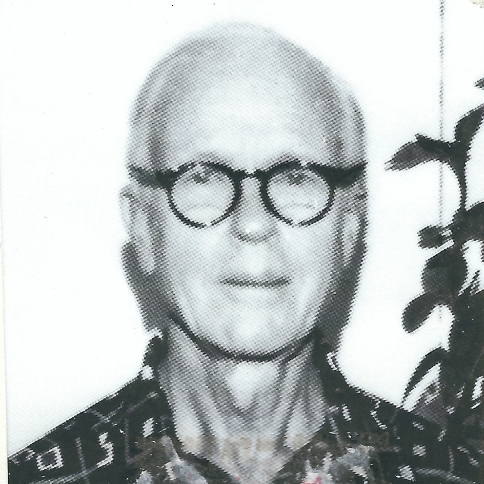
Martin L. Perl

Wolf Prize Laureate in Physics 1982

Martin L. Perl


Affiliation at the time of the award:

Stanford Linear Accelerator Center, Stanford University, USA


Award citation:

“for their experimental discovery of unexpected new particles establishing a third generation quarks and leptons”.


Prize share:

Martin L. Perl

Leon M. Lederman


Professor Martin L. Perl single-handedly pushed, inspired, and directed the search for a new heavy lepton, which was not wanted by any theory and was not expected by the vast majority of particle physicists. The Perl group designed the apparatus to provide an unambiguous signature of the production and decay of a pair of heavy leptons. After the first events indicating the production of a pair of tau leptons, an intense period of review and criticism was required to verify this hypothesis. Since each candidate tau decayed into a visible electron or muon and a neutrino, which always escaped detection, the unambiguous identification of the tau presented unusual difficulty. Subsequent experiments determined many properties of the tau lepton and proved that the neutrino emitted in its decay is not one of the two known neutrinos and must be a sixth lepton completing the third lepton family. While many people contributed to these experiments, it was Professor Perl who guided the work and it was his careful analysis of the early data, which proved the existence of the new particle.

Mark G. Krein

Wolf Prize Laureate in Mathematics 1982

Mark G. Krein


Affiliation at the time of the award:

Institute of Physical Chemistry of Ukrainian S.S.R. Academy of Sciences, USSR


Award citation:

“for his fundamental contributions to functional analysis and its applications”.


Prize share:

Mark G. Krein  

Hassler Whitney


The work of Mark Grigorevich Krein is the culmination of the noble line of research began by Chebyshev, Stieltjes, S. Bernstein and Markov and continued by F. Riesz, Banach and Szego. Krein brought the full force of mathematical analysis to bear on problems of function theory, operator theory, probability and mathematical physics. His contributions led to important developments in the applications of mathematics to different fields ranging from theoretical mechanics to electrical engineering. His style in mathematics and his personal leadership and integrity have set standards of excellence.

Leon M. Lederman

Wolf Prize Laureate in Physics 1982

Leon M. Lederman


Affiliation at the time of the award:

Fermi National Accelerator Laboratory Chicago, USA

Columbia University, USA


Award citation:

“for their experimental discovery of unexpected new particles establishing a third generation quarks and leptons”.


Prize share:

Leon M. Lederman

Martin L. Perl


Professor Leon M. Lederman and his associates discovered the upsilon particle after a long and sophisticated experimental program devoted to the study of the production of muon pairs, which was of interest in its own right. The upsilon and its two partners discovered in the same experiment were immediately recognized as the ground state and the first two excited states of the spectrum of bound states of a new fifth quark and its antiquark. The spacings between the energy levels provided significant new information for the theories of quantum chromodynamics describing the binding of quarks into hadrons, while the very existence of a fifth quark raised much deeper problems, which are still unresolved.

In addition, Lederman has participated in many other fundamental physics experiments, including the discoveries of the long-lived KO, the non-conservation of parity in muon decay and the existence of two kinds of neutrinos.

John C. Polanyi

Wolf Prize Laureate in Chemistry 1982

John C. Polanyi


Affiliation at the time of the award:

University of Toronto, Canada


Award citation:

“for his studies of chemical reactions in unprecedented detail through development of the infrared chemiluminescence technique, and for envisaging the principles underlying the chemical laser”.


Prize share:

John C. Polanyi

George C. Pimentel


Professor John Charles Polanyi has made outstanding contributions to modern chemical dynamics. In 1959 he developed the field of infrared chemiluminescence. Using this technique he was able to measure, for the first time, the distribution of individual quantum states resulting from an elementary chemical reaction. In the early sixties he predicted the infrared chemical laser. He then proceeded to develop the theory of energy disposal and of energy requirements in chemical reactions. He succeeded in achieving direct spectroscopic detection of transition states. Through these contributions he has been a prime innovator in shaping the field of chemical dynamics, as we now know it.

Jean-Pierre Changeux

Wolf Prize Laureate in Medicine 1982

Jean Pierre Changeux


Affiliation at the time of the award:

Institut Pasteur, France


Award citation:

“for the isolation, purification and characterization of the acetylcholine receptor”.


Prize share:

Jean Pierre Changeux

Sir James W. Black

Solomon H. Snyder


Receptor sites in cell membranes are recognized to have cardinal importance in many physiological and pathological processes. Our three prize winners have each made notable contributions in this area.

Jean Pierre Changeux provided a deeper understanding of the molecular mechanisms of cholinergic neurotransmission, and the functional pathology of neurological disorders such as myasthenia gravis.

Hassler Whitney

Wolf Prize Laureate in Mathematics 1982

Hassler Whitney


Affiliation at the time of the award:

Institute for Advanced Study, USA


Award citation:

“for his fundamental work in algebraic topology, differential geometry and differential topology”.


Prize share:

Hassler Whitney

Mark G. Krein  


The innovative ideas of Professor Hassler Whitney have been the seed from which contemporary work in combinatorics, topology and differential geometry have grown to maturity. Matroids, differentiable manifolds, fiber bundles, characteristic classes, classifying spaces, stratifications, rational homotopy are only some of the concepts that trace their parentage to Whitney. His work inaugurates the style of geometric and combinatorial reasoning that has become the standard for the second half of the Twentieth Century.

George C. Pimentel

Wolf Prize Laureate in Chemistry 1982

George C. Pimentel


Affiliation at the time of the award:

University of California, USA


Award citation:

“for development of matrix isolation spectroscopy and for the discovery of photodissociation lasers and chemical lasers”.


Prize share:

George C. Pimentel

John C. Polanyi


Professor George Claude Pimentel has made pioneering contributions to molecular spectroscopy and laser chemistry. In 1954 he developed the matrix isolation technique by which spectra of free radicals and unstable molecules at very low temperatures can be detected. In 1964-1965 Pimentel created the first photodissociation and chemical lasers. These are amongst the most efficient and powerful lasers known. The chemical laser was subsequently developed by Pimentel and collaborators as a most sensitive tool for the microscopic elucidation of chemical reaction processes. Both chemical lasers and the iodine photodissociation laser figure importantly in current efforts to achieve power generation by laser induced nuclear fusion reactions.

Wendell L. Roelofs

Wolf Prize Laureate in Agriculture 1982

Wendell L. Roelofs


Affiliation at the time of the award:

New York State Agricultural Experiment Station, College of Agriculture and Life Sciences, Cornell University, USA


Award citation:

“for his fundamental chemical and biological research on pheromones and their practical use in insect control”.


Prize share:

None


Wendell L. Roelofs (born in 1938, USA) has made outstanding contributions to fundamental knowledge of insect pheromones and carried out clear demonstrations of the potential value of pheromones in the development of more efficient and environmentally acceptable strategies for the control of pest insects. His original scientific findings may be applied, with success, to the monitoring and control of insect pests damaging to crops or livestock. Practical application of the results of this scientific research in ways benefiting humanity is then on records in a field of immense importance to the whole world: insect damage to crops during growth, or after harvest under poor storage conditions, produce losses variously estimated as between 20% and 50% of the potential harvest.

Pheromones are specific chemical compounds emitted by insects, which affect the behavior of other individuals of the same species. These compounds are responsible for the communication between conspecific insects. The most known ones are the sex pheromones, which are released by the young female insects, dispersed in space and attract males from distances of hundreds of meters.

Following the chemical identification of a number of such pheromones and the study of the biological activity, the road was open for implementation of this knowledge in two major practical ways: a) monitoring of insect pest populations by means of pheromone-baited traps and dispensers, whether of natural or synthetic origin. b) direct insect control by mass trapping, using traps as mentioned above and/or by disruption of the chemical communication of the insect population through over saturation of the environment with an overdose of pheromone preparations. Thus serious pests can be suppressed without recourse to dangerous toxic pesticides.

In various countries, including Israel, such methods are already applied inter alia for the control of major cotton pests, as well as in fruit tree orchards and citrus groves.

Victor J. Weisskopf

Wolf Prize Laureate in Physics 1981

Victor J. Weisskopf


Affiliation at the time of the award:

Massachusetts Institute of Technology, U.S.A.


Award citation:

“for their outstanding contributions to theoretical physics, especially in the development and application of the quantum theory of, fields”.


Prize share:

Victor J. Weisskopf

Gerard T. Hooft

Freeman J. Dyson


The activity of Professor Victor F. Weisskopf (born in 1908, Austria) extends over a period of more than 50 years and covers two subfields of theoretical physics: quantum field theory and theoretical nuclear physics. Furthermore, he has gained a reputation as an international statesman In quantum field theory his main contributions include an early recognition that the incorporation of the positron in quantum electrodynamics eased to a large extent the self-energy difficulties and that infinities might be removed by renormalization of the electron’s mass and charge. Also, in collaboration with Pauli, he formulated the correct quantization method for boson fields and gave the proper method for extending to bosons the concept of antiparticles. These chievements make him one of the pioneers of quantum field theory.

In nuclear physics he successfully applied thermodynamical methods to Bohrs compound nucleus model obtaining many semiquantitative results that guided the art for years. Furthermore, he analyzed with H. Feshbach and C. Porter neutron nucleus scattering. Introducing statistical methods, founded on quantum mechanics, that have been successfully applied in several different contexts even outside of the nuclear field.

As Director of CERN and on many other occasions he has shown considerable diplomatic ability addressed to improve international relations in science, fostering, to quote the statute of the Wolf Foundation, humanity and brotherly relationships amongst the peoples.