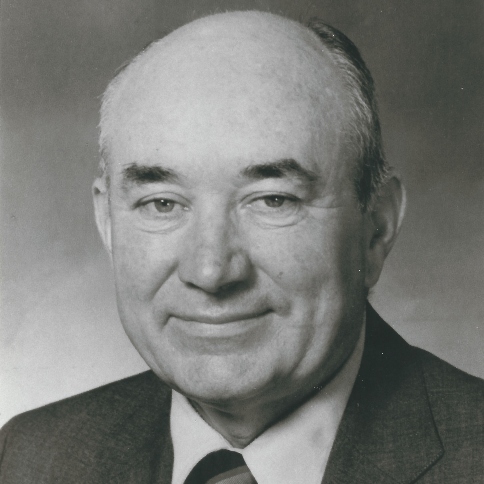
Gilbert Stork

Wolf Prize Laureate in Chemistry 1995/6

Gilbert Stork


Affiliation at the time of the award:

Columbia University, USA


Award citation:

“for designing and developing novel chemical reactions which have opened new avenues to the synthesis of the synthesis of complex molecules, particularly polysaccharides and many other biologically and medicinally important compounds”.


Prize share:

Gilbert Stork 

Samuel J. Danishefsky


Gilbert Stork (born in 1921, Belgium) studied his Bachelor of Science degree at the University of Florida from 1940 to 1942. He later obtained his Ph.D. in 1945 from the University of Wisconsin–Madison under the supervision of Samuel M. McElvain. During his time at Wisconsin, Stork developed a lasting friendship with Carl Djerassi.

Over almost five decades, Professor Gilbert Stork has changed the face of organic chemistry, and organic synthesis in particular. Stork’s contributions to the development of theories of stereoelectronic control over chemical reactions, include the SN2′ reaction, polyene cyclizations, alkylation reactions with enolates and enolate equivalents, reactions involving enamines and metalloenamines, the paradigm of trapping kinetic enolates, and various annulation reactions. Stork’s pioneering studies into free radical cyclizations have been recognized as one of the most powerful and concise strategies for assembling polycyclic natural products. Once considered the least tractable of synthetic intermediates, free radical chemistry is now routinely practiced in synthetic laboratories throughout the world.

Professor Samuel J. Danishefsky has developed a number of new concepts in organic reactivity, thoroughly investigated the relevant stereochemical and mechanistic issues and subsequently provided new solutions to demanding problems in natural product synthesis. Examples include his polyannulating reagents in steroid synthesis, his now routinely employed dienes for Diels-Alder and hetero-Diels-Alder reactions, and more recently, his use of glycals for the synthesis of oligosaccharides. The capacity that these methodologies bring to the synthesis of complex structures which bear multiple asymmetric centers is a major triumph in chemistry.

The synthesis of complex polysaccharides has been one of the long-standing problems in synthesis. Such compounds play a crucial role in many biologically important phenomena, including cell adhesion, enzyme inhibition, determination of blood groups, immune response and cancer. Polysaccharides represent one of the three most important classes of biopolymers. While the synthesis of the other two – polynucleotides and polypeptides – has reached a satisfactory level of maturity with an immense impact on the study of biology and on medicine, the synthesis of polysaccharides has remained a formidable challenge.

In 1993 Danishefsky announced a highly efficient synthesis of oligosaccharides on a polymer support using same of the mutually developed tools. More recently, he has extended the method to the solid-phase synthesis of glycopeptides. This work has brought us to the threshold of a new era where complex carbohydrates can be assembled with an unprecedented selectivity and efficiency. Some of these fully synthetic compounds, such as the human breast cancer tumor antigen, are now being evaluated with respect to anticancer vaccines.

The influence of this mentor/disciple couple on several generations of chemists in organic synthesis and related bioorganic areas has been immense. Their noncompromising commitment to academic excellence has produced hundreds of top-class organic chemists, many of which are now university professors and key scientists in the chemical and bio-medical industries around the world.

Frank J. Stevenson

Wolf Prize Laureate in Agriculture 1995/6

Frank J. Stevenson


Affiliation at the time of the award:

University of Illinois, USA


Award citation:

“for their pioneering contributions to our understanding of the chemistry of soil organic matter and its application to agriculture”.


Prize share:

Frank J. Stevenson 

Morris Schnitzer


Dr. Morris Schnitzer and Professor Frank J. Stevenson are the pioneers of our understanding of the chemistry of soil organic matter. They have applied their discoveries to the improvement of agricultural practice. Their research has elucidated the composition and physicochemical properties of humic acids. Their utilization of modern analytic techniques has significantly improved our understanding of the structure of humic acids in soils. Their research has had a major impact on our knowledge of the behavior of nutrients and hazardous chemicals in soils.

Their lifetime of research in this field has greatly improved management of soil resources and maintenance of environmental quality.

Andrew J. Wiles

Wolf Prize Laureate in Mathematics 1995/6

Andrew J. Wiles


Affiliation at the time of the award:

Princeton University, USA


Award citation:

“for spectacular contributions to number theory and related fields, major advances on undamental conjectures, and for settling Fermat’s last theorem”.


Prize share:

Andrew J. Wiles 

Robert P. Langlands


Andrew J. Wiles has made spectacular contributions toward the resolution of long standing fundamental problems in number theory by introducing profound and novel methods. The problems that he has addressed on his own and jointly with others include; the Birch and Swinnerton-Dyer conjectures, the main conjecture of Iwasawa theory, and the Shimura-Taniyama-Weil conjecture. His work, to date, culminated in the proof of the celebrated Fermat’s last theorem. This problem is responsible for shaping much of number theory in the last two centuries.

Richard A. Lerner

Wolf Prize Laureate in Chemistry 1994/5

Richard Lerner


Affiliation at the time of the award:

Scripps Research Institute, USA


Award citation:

“for converting antibodies into enzymes, thus permitting the catalysis of chemical reactions considered impossible to achieve by classical chemical procedures”.


Prize share:

Richard Lerner

Peter G. Schultz 


Richard A. Lerner (born in 1938, USA) showed talent in both chemistry and wrestling during his school years, attending Hirsch High School. After completing his undergraduate studies at Northwestern University, Lerner earned an MD from Stanford Medical School in 1964. He proceeded to undertake postdoctoral training at Scripps Clinic and Research Foundation. During the 1970s, Lerner conducted research at the Wistar Institute in Philadelphia before returning to La Jolla to the Research Institute of Scripps Clinic. In 1982, he assumed the role of chairman of the Department of Molecular Biology, and five years later, he took on the position of director. In 1991, when the TSRI (The Scripps Research Institute) was established as a nonprofit entity, Lerner became its inaugural president.

Dr. Richard A. Lerner and Professor Peter G. Schultz independently and almost simultaneously in 1986, conceived and demonstrated the idea that antibodies could selectively catalyze chemical reactions. Lerner´s research group raised antibodies against negatively charged phosphate transition-state analogues, and showed that these selectively catalyzed the hydrolysis of carbonates. Schultz´s group did likewise with phosphonates, thereby hydrolysing esters. Their recognition of the importance of the transition state in the thermodynamics and kinetics of enzyme reactions, and the understanding of the diversity of the immune system, were essential to the development of this advance.

The earliest experiments involved simple reactions with well-studied mechanisms. Since that pioneering event antibodies have been developed that catalyze a wide range of chemical and biological reactions. Recent work, under the separate leadership of Lerner and of Schultz, has focused on selective chemical transformations that are difficult to achieve by existing chemical methods. These include disfavoured chemical reactions, reactions along one of many nearly equivalent reaction coordinates, and reactions in which the inherent reactivity or molarity of the reactants is reversed. In each case the binding energy of the immunogen and the antibody was used to accelerate and control the reaction. The specificity, and in some cases the rates, of these antibody catalyzed reactions rival those of natural enzymatic reactions, which have only reached their high efficiency through the slow processes of evolution.

This work is of high importance for the future of synthetic organic chemistry. It is a marvellous illustration of how a deep knowledge of biological processes, combined with very sophisticated chemistry, produced a result which practitioners in only one of these two disciplines would have been unlikely to reach.

Peter G. Schultz

Wolf Prize Laureate in Chemistry 1994/5

Peter G. Schultz


Affiliation at the time of the award:

University of California, USA


Award citation:

“for converting antibodies into enzymes, thus permitting the catalysis of chemical reactions considered impossible to achieve by classical chemical procedures”.


Prize share:

Peter G. Schultz 

Richard Lerner


Peter G. Schultz (born in 1956, USA) earned his undergraduate degree at Caltech in 1979, where he continued for his doctoral degree in 1984 under the guidance of Peter Dervan. Following this, Schultz spent a year at the Massachusetts Institute of Technology under Christopher Walsh before joining the chemistry faculty at the University of California, Berkeley. In 1985, he became a Principal Investigator at Lawrence Berkeley National Laboratory and, in 1994, an investigator of the Howard Hughes Medical Institute.

Dr. Richard A. Lerner and Professor Peter G. Schultz independently and almost simultaneously in 1986, conceived and demonstrated the idea that antibodies could selectively catalyze chemical reactions. Lerner´s research group raised antibodies against negatively charged phosphate transition-state analogues, and showed that these selectively catalyzed the hydrolysis of carbonates. Schultz´s group did likewise with phosphonates, thereby hydrolysing esters. Their recognition of the importance of the transition state in the thermodynamics and kinetics of enzyme reactions, and the understanding of the diversity of the immune system, were essential to the development of this advance.

The earliest experiments involved simple reactions with well-studied mechanisms. Since that pioneering event antibodies have been developed that catalyze a wide range of chemical and biological reactions. Recent work, under the separate leadership of Lerner and of Schultz, has focused on selective chemical transformations that are difficult to achieve by existing chemical methods. These include “disfavoured” chemical reactions, reactions along one of many nearly equivalent reaction coordinates, and reactions in which the inherent reactivity or molarity of the reactants is reversed. In each case the binding energy of the immunogen and the antibody was used to accelerate and control the reaction. The specificity, and in some cases the rates, of these antibody catalyzed reactions rival those of natural enzymatic reactions, which have only reached their high efficiency through the slow processes of evolution.

This work is of high importance for the future of synthetic organic chemistry. It is a marvellous illustration of how a deep knowledge of biological processes, combined with very sophisticated chemistry, produced a result which practitioners in only one of these two disciplines would have been unlikely to reach.

Perry L. Adkisson

Wolf Prize Laureate in Agriculture 1994/5

Perry L. Adkisson


Affiliation at the time of the award:

Texas A&M University, USA


Award citation:

“for their contributions to the development and implementation of environmentally beneficial integrated pest management systems for the protection of agricultural crops”.


Prize share:

Perry L. Adkisson 

Carl B. Huffaker


Perry L. Adkisson (born in 1929, USA) is Chancellor Emeritus of Texas A&M University, and Regents Professor of Entomology. He recently served as Executive Director of the George Bush Presidential Library Center. He received his M.Sc. degree from the University of Arkansas and Ph.D. from Kansas State Univeristy.

Professors Carl B. Huffaker and Perry L. Adkisson performed basic research on crop pests, and subsequently broadened their work to develop biologically-based systems for pest control. Both were major contributors to the development and implementation of integrated pest anagement, or IPM, systems for crop production. Huffaker successfully demonstrated the efficacy of biological control agents for the control of weeds and insects. Adkisson studied the life cycles and seasonal dormancy of cotton insect pests.

Both Huffaker and Adkisson were leaders in large-scale programs that demonstrated the effectiveness of IPM systems for crop protection, and that led to the establishment of IPM as an environmentally beneficial and economically favorable system for crop production that is today used throughout the world.

Jurgen K. Moser

Wolf Prize Laureate in Mathematics 1994/5

Jurgen K. Moser


Affiliation at the time of the award:

Swiss Federal Institute of Technology (ETH), Switzerland


Award citation:

“for his fundamental work on stability in Hamiltonian and his profound and influential contributions to nonlinear differential equations”.


Prize share:

None


Professor Jurgen K. Moser’s achievements include:

His role in the development of “KAM” (Kolmogorov-Arnold-Moser) theory. This celebrated theory describes the structure and stability of dynamical systems which are close to being completely integrable. It has shaped the modern theory of Hamiltonian mechanics and has wide applications in science.

His proof of the so called “Harnack inequality” in elliptic and parabolic differential equations, which has become a standard tool in nonlinear partial differential equations.

His fundamental works in analysis related to complex, symplectic and differential geometry, in particular the classification of local invariants of complex manifolds, nonlinear Sobolev inequalities, deformation techniques for symplectic structures and stability of foliations.

Gerhard Richter

Wolf Prize Laureate in Arts 1994/5

Gerhard Richter


Award citation:

“for his vast artistic activity, which has influenced the contemporary art scene of the past three decades”.


Prize share:

None


Despite History and in conjunction with it, Gerhard Richter (born in 1932, Germany) is reinventing Painting for today, transcending its very laws in order to dare to impose Beauty. Painting Situated between denial and challenge, forcing analysis to transcend the supposed contradictions (representation/abstraction), and the ever repeated paradoxes (neutrality/expression), focusing on the straightforward visual evidence of an utterly resolute dialectic, in Richter´s case painting imposes its unanswerable presence. Its “impact” and the “truth” of the images claimed by the artist are grounded in the
magnitude of the stakes and a particularly clear-sighted vision.

The force of this work renders obsolete the constant references to the “end of Painting”, its inability to represent. Calling on history and art history, painting, here sovereign, imposes itself, with the requisite distance to appreciate properly the mastery of an artist who is hyperaware of where he is and what he is doing, of his subject and his object.

The character of Gerhard Richter´s work is continuously ambivalent: at the same time demonstrative and retentive, open and closed, ebullient and restrained, where chance and necessity, rigour and effect, dullness and chromatic exuberance, coldness and emotion alternate in the permanent reinvention of a solution.

We must dare to talk of Beauty gained over indifference, of Painting as an act of faith. By doing so, Gerhard Richter introduces the problem of representation and the representable, of history and politics, in the specific context of post-Auschwitz Germany, of Germany beyond the Wall.

Reflection, in both senses of the term – mirror and analysis – is one of the key words of this work, where distance itself acts as the safest of all guarantees of an emotional language for today.

Carl B. Huffaker

Wolf Prize Laureate in Agriculture 1994/5

Carl B. Huffaker


Affiliation at the time of the award:

University of California, USA


Award citation:

“for their contributions to the development and implementation of environmentally beneficial integrated pest management systems for the protection of agricultural crops”.


Prize share:

Carl B. Huffaker

Perry L. Adkisson 


Carl B. Huffaker (born in 1914, USA) received his M.Sc. degree from the University of Tennessee and Ph.D form Ohio State University, and has been associated with the University of California, Berkley, since 1946. He is a past president of the Entomological Society of America.

Professors Carl B. Huffaker and Perry L. Adkisson performed basic research on crop pests, and subsequently broadened their work to develop biologically-based systems for pest control. Both were major contributors to the development and implementation of integrated pest management, or IPM, systems for crop production. Huffaker successfully demonstrated the efficacy of biological control agents for the control of weeds and insects. Adkisson studied the life cycles and seasonal dormancy of cotton insect pests.

Both Huffaker and Adkisson were leaders in large-scale programs that demonstrated the effectiveness of IPM systems for crop protection, and that led to the establishment of IPM as an environmentally beneficial and economically favorable system for crop production that is today used throughout the world.

Mikhael Gromov

Wolf Prize Laureate in Mathematics 1993

Mikhael Gromov


Affiliation at the time of the award:

IHES – Institut des Hautes Etudes Scientifiques, France


Award citation:

“for his revolutionary contributions to global Riemannian and symplectic geometry, algebraic topology, geometric group theory and the theory of partial differential equations”.


Prize share:

Mikhael Gromov

Jacques Tits 


Professor Mikhael Gromov has introduced a large number of very original new concepts into the classical field of differential geometry which have led to the solution of a large number of important and apparently unsolvable problems. He has introduced new invariants linking the differential geometric structures with those of algebraic topology which have proved their value both in Gromov´s hands and in the hands of others. He succeeded, for example, in estimating the Betti numbers of Riemannian manifolds solely in terms of a lower bound on the sectional curvature. Much of his work makes use of concepts of the convergence of Riemannian manifolds. These daring ideas are also at the heart of his remarkable solution of the problem of groups of polynomial growth. This geometric approach together with an idea of E. Rips led him to the construction of the theory of hyperbolic groups which has revolutionized the theory of discrete groups. He has also made profound contributions to the global theory of partial differential equations and to the theory of symplectic manifolds, constructing invariants which, for the first time, give a description of the degree of symplectic rigidity. His works are characterized by their incomparable depth and startling originality and will continue to be an inspiration for geometers for many years to come.