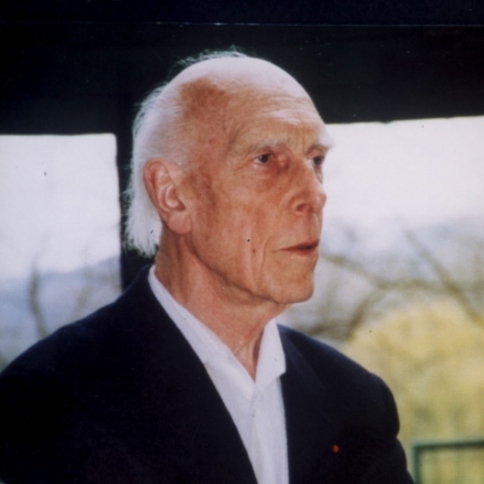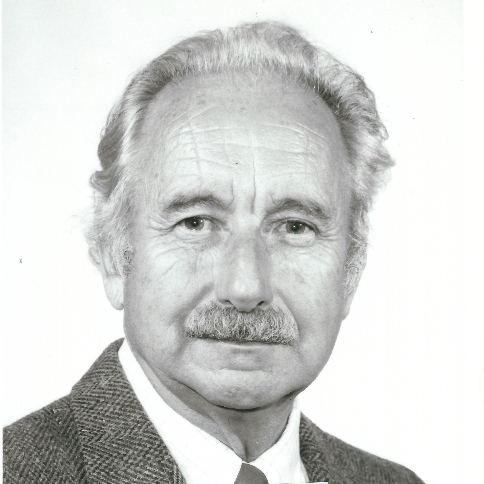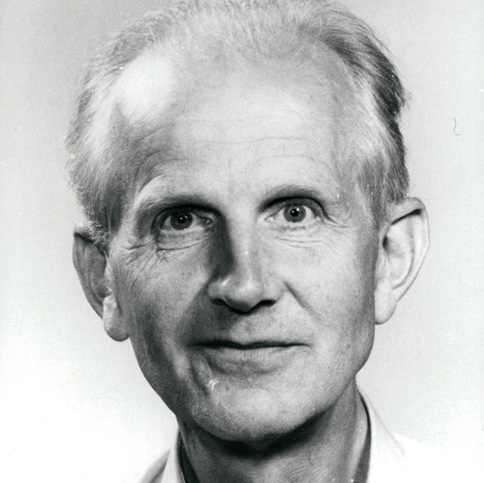
Lars Hörmander

Wolf Prize Laureate in Mathemstics 1988

Lars Hörmander


Affiliation at the time of the award:

University of Lund, Sweden


Award citation:

“for fundamental work in modern analysis, in particular, the application of pseudo differential and Fourier integral operators to linear partial differential equations”.


Prize share:

Lars Hörmander

Friedrich Hirzebruch 


Professor Lars Hörmander is the foremost contributor to the modern theory of linear partial differential equations. For his early work on equations with constant coefficients he was awarded the 1962 Fields Medal, the highest honor a young mathematician can receive. Since then, he has played a leading role in the development of the modern machinery of the subject, viz. pseudodifferential operators (which combine and perfect differential and singular integral operators) and Fourier integral operators (which originate from geometrical optics). Hörmander applied these new tools with striking effect; the modern view of wave fronts and their singularities provides an outstanding example of the success of these methods.

The whole development has been described by Hörmander in a masterly four volume treatise, which has become the standard of the field. Hörmander has also achieved notable results concerning several complex variables, the Nash-Moser implicit function theorem, scattering theory, nonlinear hyperbolic equations, etc., illustrating in these subjects also his extraordinary technical power and versatility.

Henri-Géry Hers

Wolf Prize Laureate in Medicine 1988

Henri-Géry Hers


Affiliation at the time of the award:

Catholic University of Louvain, Belgium


Award citation:

“for the biochemical elucidation of lysosomal storage diseases and the resulting contributions to biology, pathology, prenatal diagnosis, and therapeutics.”


Prize share:

Henri-Géry Hers

Elizabeth F. Neufeld 


The whole field of genetic storage diseases (thesaurismoses) except for a few glycogen storage conditions (nonlysosomal) was a complete mystery. The diseases were known mostly by the names of the clinicians who first described them: Hunter, Hurler, Tay-Sachs, Niemann-Pick, Gaucher, Pompe, Fabry, etc. Morphological studies had shown the presence of abundant abnormal deposits in the tissues of the patients, hence the term “storage disease”, and in some cases the chemical composition of the deposits had been identified, at least roughly. The underlying enzymic deficiencies were unknown, but were generally believed to affect some biosynthetic pathway.

Thanks to the work of Professors Hers and Neufeld and to the investigations they have sparked, more than 30 genetic storage diseases are now known to be deficiencies of lysosomal digestion and a common pathological pattern with unique features has been recognized. These discoveries have led to major advances in cell biology, including the identification of a number of new lysosomal enzymes, the recognition of the importance of lysosomal autophagy, and the elucidation of the remarkable mechanism whereby lysosomal enzymes are targeted to their destination. From the medical point of view it has now become possible, in this group of rare but diverse and tragically crippling diseases, against which no prevention or therapy was available, to provide genetic counselling through the detection of heterozygotes, to effect prenatal diagnosis in time for therapeutic abortion, and even to seriously consider and investigate the possibility of replacement therapy.

Professor Henri-Géry Hers (born in 1923, Belgium) discovered the first such disease and fathered the concept that allowed an extensive elucidation of one of the most mysterious chapters of pathology in a span of less than ten years. This important achievement is not an isolated chance event. It arose as an offshoot of a life-long commitment to the study of carbohydrate metabolism, which started in the early 1950s with the description of the “Hers pathway” of fructose metabolism and ends, provisionally, with the discovery of a new intracellular messenger of major significance: fructose 2, 6-bisphosphate. In between are a long series of papers devoted to the control of glycogen metabolism in the liver, a number of contributions to genetic pathology (in addition to lysosomal storage diseases), and studies on purine metabolism.

Giancarlo De Carlo

Wolf Prize Laureate in Architecture 1988

Giancarlo De Carlo


Award citation:

“for their work which represents the spirit of an architecture that looks to the future without renouncing the past; brings about meaningful shapes and environments without forsaking human and social aspects and responds to universal issues without neglecting regional attributes”.


Prize share:

Giancarlo De Carlo

Fumihiko Maki


With unstable values and dubious notions prevailing in their field, Fumihiko Maki and Giancarlo De Carlo, each in his own way and in different corners of the world, have succeeded in reaching invaluable achievements, which successfully augment the scale of the modern movement in architecture thus constituting its legitimate extension – most reasonable sequel.

Giancarlo De Carlo maintained a courageous stand vis-a-vis the current architectural scene and, also a solitary one. His range of interests spanning a large horizon. Significantly in this respect, is the name De Carlo chose for the review he initiated and directs: “Spazio e Societa”.

Particularly commendable – even exemplary – is the painstaking work he has carried out with great skill over the years for the benefit of smaller mediaeva l towns in Italy on a general planning, restorative and architectural level: notably Urbino.

De Carlo is also influential polemically through his writings, his lecturing and his teaching at home and abroad. As for the buildings of this tireless all-rounder, they are admirably sited, inventive and subtly detailed always generously conceived to accommodate people. They are also manifestly contemporary yet unobtrusively imbued with the past. They are, in fact, gratifyingly intelligent.

Fumihiko Maki

Wolf Prize Laureate in Architecture 1988

Fumihiko Maki


Affiliation at the time of the award:

University of Tokyo, Japan


Award citation:

“for their work which represents the spirit of an architecture that looks to the future without renouncing the past; brings about meaningful shapes and environments without forsaking human and social aspects and responds to universal issues without neglecting regional attributes”.


Prize share:

Fumihiko Maki

Giancarlo De Carlo


With unstable values and dubious notions prevailing in their field, Fumihiko Maki and Giancarlo De Carlo, each in his own way and in different corners of the world, have succeeded in reaching invaluable achievements, which successfully augment the scale of the modern movement in architecture thus constituting its legitimate extension – most reasonable sequel.

Within the spectacular panorama of contemporary architecture in Japan, Fumihiko Maki is the steadiest major figure. Excellence is the hallmark of his searching mind and modest personality. Maki’s buildings are ingenious, precise, sensitive and exquisitely made. They are welcomingly proportioned (very large ones remaining gracefully humane) but also lively, cheerful and pleasantly experimental exciting in a quiet sophisticated sort of way. Since Maki is a master of imaginative logic, there is still room for wonder within what is essentially reasonable. Above all, his work is wide open to the future and never either nostalgically close to the past or crudely separated from it; nor is it ever ponderous or even remotely rhetorical.

Maki knows the world – and within it his own country. He is, in fact, equally attuned to both, which is one clue to his remarkably balanced achievements. In the field of urbanism and mass housing, Maki’s thesis on Group Form left an early mark. As a teacher he is cherished in both Japan and the U.S.

Friedrich Hirzebruch

Wolf Prize Laureate in Mathematics 1988

Friedrich Hirzebruch


Affiliation at the time of the award:

Max-Planck-Institut fuer Mathematik, Germany

University of Bonn, Germany


Award citation:

“for outstanding work combining topology, algebraic and differential geometry, and algebraic number theory; and for his stimulation of mathematical cooperation and research”.


Prize share:

Friedrich Hirzebruch 

Lars Hörmander


Friedrich Hirzebruch (born in 1927, Germany) pursued his studies at the University of Münster from 1945 to 1950, with an interlude of one year at ETH Zürich. Following this, he held a position at Erlangen and subsequently spent the years 1952 to 1954 at the Institute for Advanced Study in Princeton, New Jersey. After a year at Princeton University from 1955 to 1956, he attained a professorship at the University of Bonn. He remained there, eventually assuming the role of director at the Max-Planck-Institut für Mathematik in 1981.

The name of Professor Friedrich Hirzebruch has been connected with famous results in the areas of topology, algebraic geometry, and global differential geometry, results which all mark the beginning of important theories and which have had an enormous influence on the development of modern mathematics.

Hirzebruchws achievements include- the discovery of the signature theorem for differentiable manifolds and the formulation and proof of the Riemann-Roch theorem for algebraic varieties; the integrality theorem for characteristic classes of differentiable manifolds; the proportionality theorem for complex homogeneous manifolds and (with A. Borel) the general theory of characteristic classes of homogeneous spaces of compact Lie groups; complex K-theory and its spectral sequence and various geometrical applications (with M.F. Atiyah); the “topological” proof of the Dedekind reciprocity theorem through 4-manifold theory and other fascinating relations between differential topology and algebraic number theory; the systematic study of Hilbert modular-forms and-surfaces and their relation to class numbers.

Many mathematicians have expanded and generalized Hirzebruch’s ideas. He himself has always been interested in the beautiful particular case and concrete problem, which he solves by creating new methods that combine unusual geometric, algebraic, and arithmetic intuition. Moreover, through his brilliant lecturing and writing, through the “Arbeitstagung Bonn” (yearly international meetings at the highest level), and through his dedicated work in scientific organizations he has greatly stimulated world-wide cooperation in research.

Christopher Polge

Wolf Prize Laureate in Agriculture 1988

Ernest John Christopher Polge


Affiliation at the time of the award:

Animal Biotechnology Cambridge Ltd., UK


Award citation:

“for pioneering work in reproductive physiology including cell preservation, fertilization processes, egg biology and embryo manipulations for domestic animal improvement”.


Prize share:

Ernest John Christopher Polge  

Charles Thibault


Dr. Ernest John Christopher Polge is renowned for his pioneering work on the cryopreservation of living cells, such as sperm and in embryos. His work in this area promoted the development of the science of cryobiology. He has also contributed significantly to our understanding of embryonic development, in vitro fertilization and embryo transplants. In addition, he led a group to international recognition for pioneering techniques in cloning livestock animals by embryo division and nuclear transfer, and initiated transgenic research by insertion of gene constructs into pronuclei of recently fertilized eggs.

Throughout his career he has been concerned with the transfer and application of science for the improvement of livestock production.

The combined contributions of Polge and Thibault have had a major impact on reproductive biology, livestock production and related reproductive issues on other mammals as well as in humans. In addition both have had a major role in the training of other scientists and their leadership roles in reproductive biology.

Elizabeth F. Neufeld

Wolf Prize Laureate in Medicine 1988

Elizabeth F. Neufeld


Affiliation at the time of the award:

UCLA School of Medicine, USA


Award citation:

“for the biochemical elucidation of lysosomal storage diseases and the resulting contributions to biology, pathology, prenatal diagnosis, and therapeutics”.


Prize share:

Elizabeth F. Neufeld 

Henri-Géry Hers


The whole field of genetic storage diseases (thesaurismoses) except for a few glycogen storage conditions (nonlysosomal) was a complete mystery. The diseases were known mostly by the names of the clinicians who first described them: Hunter, Hurler, Tay-Sachs, Niemann-Pick, Gaucher, Pompe, Fabry, etc. Morphological studies had shown the presence of abundant abnormal deposits in the tissues of the patients, hence the term “storage disease”, and in some cases the chemical composition of the deposits had been identified, at least roughly. The underlying enzymic deficiencies were unknown, but were generally believed to affect some biosynthetic pathway.

Thanks to the work of Professors Hers and Neufeld and to the investigations they have sparked, more than 30 genetic storage diseases are now known to be deficiencies of lysosomal digestion and a common pathological pattern with unique features has been recognized. These discoveries have led to major advances in cell biology, including the identification of a number of new lysosomal enzymes, the recognition of the importance of lysosomal autophagy, and the elucidation of the remarkable mechanism whereby lysosomal enzymes are targeted to their destination. From the medical point of view it has now become possible, in this group of rare but diverse and tragically crippling diseases, against which no prevention or therapy was available, to provide genetic counselling through the detection of heterozygotes, to effect prenatal diagnosis in time for therapeutic abortion, and even to seriously consider and investigate the possibility of replacement therapy.

The work of Professor Elizabeth F. Neufeld (born in 1928, France) is characterized by its perfectly systematic and logical progression: Starting with the chance observation that two cell lines from patients suffering from different genetic storage disease “correct” each other’s defect when cultured together, she has moved unerringly to the recognition of the “correcting factors” as being lysosomal hydrolases,and hence to the elucidation of the precise enzymatic defect responsible for several mucopoly saccharidoses. In addition, by studying the selective uptake of the factors she has discovered that, during their biosynthesis, lysosomal enzymes receive a specific “recognition marker” that serves to target them selectively to lysosomes, and she has identified I-cell disease as a genetic deficiency of this targeting process.

Charles Thibault

Wolf Prize Laureate in Agriculture 1988

Charles Thibault


Affiliation at the time of the award:

University of Paris VI, France


Award citation:

“for pioneering work in reproductive physiology including cell preservation, fertilization processes, egg biology and embryo manipulations for domestic animal improvement”.


Prize share:

Charles Thibault

Ernest John Christopher Polge


Professor Emeritus Charles Thibault is renowned for his pioneering research on the maturation of the egg and its fertilization. In this regard he had a major role in characterizing the control of meiosis in the egg and providing the first cytological descriptions of fertilization events leading up to the first cleavage. His work progressed from these studies to in vitro fertilization and the conditions for culturing eggs, the study of sperm capacitation and gamete ageing in a number of different species. The results of his work improved our understanding of embryonic mortality differences among species, elevating conception rates and factors involved in the successful use of in vitro fertilization. Throughout his career he has been recognized for his leadership in reproductive biology.

The combined contributions of Polge and Thibault have had a major impact on reproductive biology, livestock production and related reproductive issues on other mammals as well as in humans. In addition both have had a major role in the training of other scientists and their leadership roles in reproductive biology.

Joshua Jortner

Wolf Prize Laureate in Chemistry 1988

Joshua Jortner


Affiliation at the time of the award:

Tel-Aviv University, Israel


Award citation:

“for their incisive theoretical studies elucidating energy acquisition and disposal in molecular systems and mechanisms for dynamical selectivity and specificity”.


Prize share:

Joshua Jortner

Raphael D. Levine


Joshua Jortner (born in 1933, Poland) earned his Ph.D. from the Hebrew University of Jerusalem in 1960. Following his doctoral studies, Jortner served as a lecturer in the Department of Physical Chemistry at the Hebrew University of Jerusalem from 1961 to 1963. Between 1962 and 1964, he worked as a research associate at the University of Chicago.In 1964, Jortner was appointed as a professor in the Department of Chemistry at Tel Aviv University, also serving as its inaugural chairman. Between 1966 and 1972, he held various administrative roles at Tel Aviv University, including deputy rector, acting rector, and vice president.

Professor Joshua Jortner is one of the most influential theoretical physical chemists of his time. His works cover a vast range of fields, such as the theory of solvated electrons, properties of excited electronic states of molecules, coherent multiphoton processes, charge transfer in polar solvents and in biophysical systems, and the dynamics of supercooled large molecules and molecular clusters. His impact on each of these fields would have been enough to earn him worldwide recognition.

However, Jortner’s most impressive achievement is undoubtedly his recognition and elucidation of the intramolecular nature of radiationless dissipation of energy in molecules of large and medium size. Based on a simple theoretical model (proposed in 1968 in collaboration with Mordechai Bixon), the basic notions specifying the energy acquisition process, the interstate coupling modes, and the mechanisms of energy disposal, were laid open.

Jortner’s ideas and terminology became seminal to the study of laser chemistry, multiphoton processes in molecules, relaxation phenomena in condensed phases and the dynamics of biophysical systems, and had an indelible impact on the modern development of chemical physics and theoretical chemistry.

.

Theodor O. Diener

Wolf Prize Laureate in Agriculture 1987

Theodor O. Diener


Affiliation at the time of the award:

Plant Protection Institute, Agricultural Research Service, USA


Award citation:

“for his discovery and pioneering fundamental research on viroids, the smallest subviral pathogens, and his applied work on viroid detection in crops.”


Prize share:

None


His fundamental and applied studies have firmly established the existence of viroids, a new group of subviral pathogens.

Dr. Diener discovered that the pathogen causing potato spindle tuber disease is not a virus, as previously believed, but a much smaller, free RNA molecule, which he named viroid. The discovery by Diener and his colleagues of other viroids affecting various cultivated plants such as chrysanthemum stunt, coconut cadang-cadang and planta macho viroid of tomato soon followed; so that today viroids are considered to be an important group of disease agents affecting potatoes, tomatoes, citrus, avocado, etc. His pioneering studies on isolation and purification showed inequivocally that viroids have a unique molecular structure, different from any other pathogen. Dr. Diener found that viroids replicate without helper virus; that viroid-complementary DNA, produced by insertion into bacteria, are themselves infectious and that the RNA transcribed in potato cells is identical with the viroid. Cloned viroid-specific cDNAs were also developed by him for novel diagnostic tests.

Dr. Diener’s work has direct application to the control of viroid diseases of many crops, as well as to the elucidation of the unique biological and molecular properties of these small disease agents.