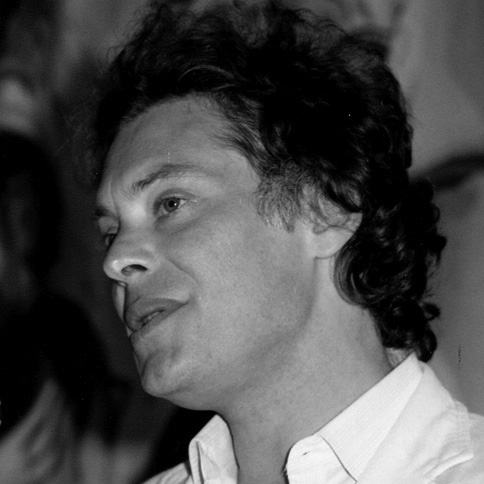
Bruno B. Rossi

Wolf Prize Laureate in Physics 1987

Bruno B. Rossi


Affiliation at the time of the award:

Massachusetts Institute of Technology, USA


Award citation:

“for the discovery of extra-solar X-ray sources and the elucidation of their physical processes”.


Prize share:

Bruno B. Rossi

Herbert Friedman

Riccardo Giacconi


All three scientists are honored for seminal contributions to X-ray astrophysics.

Friedman, Rossi, and Giacconi are universally recognized as the principal founders of X-ray astrophysics, a new field of astronomical science which has proved to be a prolific source of fundamental discoveries and deeper physical understanding about high energy processes in the universe. Their work has profoundly influenced virtually every area of astronomical research, from the study of the sun and other stars of all types and luminosity classes to investigations of the interstellar medium, galaxies, clusters of galaxies and the distant quasars. Their brilliant insights, technical inventiveness, and bold leadership stimulated the rapid growth of X-ray astronomy from its early stages of speculation and exploration in the 1950´s and 1960´s to its recent high level of productive research. All agencies engaged in space science are now developing major orbiting facilities for X-ray observations which will playa vital role in the future of astronomical science.

Professor Bruno B. Rossi (born in 1905, Italy) initiated in 1959 research aimed at utilizing the burgeoning space technologies in a search for extra-solar X-ray sources. Motivated by a lifelong interest in the nature and origins of cosmic radiations, a field of study to which he had been making major contributions since the early 1930’s, Rossi persuaded the management and scientists at American Science and Engineering, Inc, to undertake a study of the theoretical and experimental prospects for X-ray astronomy. This study, carried out under the leadership of Riccardo Giacconi, led to proposals for new forms of X-ray optics utilizing grazing incidence reflection, and exploratory rocket experiments to scan the sky with X-ray detectors of much greater sensitivity than had previously been used. In a series of four flights, sponsored by the United States Air Force and carried out from 1961 to 1963, the AS&E group discovered discrete extra- solar X-ray sources and the X-ray background. In discussing the origin of X rays in celestial bodies, Rossi drew attention to the process of thermal bremstrahlung emission by extremely hot low-density gas, now known to be the production mechanism in most X-ray sources,

Upon completing a study of the prospects for X-ray astronomy, initiated in 1959 at the suggestion of Bruno Rossi, Professor Riccardo Giacconi undertook the development at American Science and Engineering, Inc. of improved methods for the detection and analysis of X rays of very low intensities with the goal of conducting an exploratory search for non-solar X-ray sources, He proposed, with Rossi, the use of grazing incidence reflection from parabolic mirrors to concentrate X rays for more sensitive detection. He also proposed the adaptation of the principles of image-forming X-ray optics, developed previously in connection with X-ray microscopy, to the construction of high resolution Xray telescopes. With his associates at AS&E, Giacconi carried out a series of rocket flights which discovered the first discrete extra-solar X-ray sources, including Sco X-I, and the diffuse X-ray background. He conducted additional rocket investigations, and conceived and directed the NASA sponsored projects which produced the solar X-ray spectrographic telescope on Skylab, the first orbiting X-ray observatory, Uhuru, and the orbiting Einstein Observatory carrying the first high resolution X-ray telescope for extra-solar observations. Among the most important discoveries made with these satellite facilities were coronal holes and X-ray bright points in the sun’s atmosphere, accretion powered binary X-ray pulsars, X-ray emitting gas in clusters of galaxies, and ubiquitous X-ray emissions by stars of all types and luminosity classes.

Ralph Riley

Wolf Prize Laureate in Agriculture 1986

Ralph Riley


Affiliation at the time of the award:

Agricultural and Food Research Council, UK


Award citation:

“for their fundamental research in cytogenetics of wheat, providing the basis for genetic improvement of cereal grains”.


Prize share:

Sir Ralph Riley

Ernest R. Sears


Sir Ralph Riley (born in 1924, UK) led a research group, which increased precision of plant breeding by experimentally describing the chromosomal architecture of wheat and related species, and by comparing genetic activities of corresponding chromosomes. During investigations which Dr. Riley started in 1958, he and his colleagues described the genetic systems by which pairing of wheat chromosomes at meiosis is limited to those which are fully homologous, and by which pairing between distantly related chromosomes is precluded. This basic knowledge allowed Dr. Riley to pair and recombine chromosomes in a way that is normally illegitimate.

The 1986 Wolf prize in agriculture is awarded to two eminent plant cytogeneticists tor their basic plant breeding research which has provided the foundation for improved cereal grain varieties.

The prize is presented to both scientists to recognize their independent but related work which led to the finding that the 5B chromosome controls chromosome pairing in wheat. This discovery allowed insertion of genes from alien species into wheat. It permits plant breeders to take desirable characteristics from alien plants, such as wild grasses, and insert them in wheat to vastly improve wheat germ plasms and cultivars.

Together, the work of these two brilliant and dedicated scientists has led to enormously improved understanding of plant cytogenetics, thus allowing plant breeders to vastly improve cereal grain varieties to feed the world’s growing and hungry population.

Samuel Eilenberg

Wolf Prize Laureate in Mathematics 1986

Samuel Eilenberg


Affiliation at the time of the award:

Columbia University, USA


Award citation:

“for his fundamental work in algebraic topology and homological algebra”.


Prize share:

Samuel Eilenberg

Atle Selberg


Professor Samuel Eilenberg began his mathematical education in the Polish School of point set topology, and has since made basic contributions to algebraic topology. Among his many seminal works are those in obstruction theory and in the creation of singular homology theory. His study of the relations between homology and homotopy is fundamental. He was one of the creators of the cohomology of groups and of the cohomology of Lie algebras and in fact of homological algebra. Each of these subjects has had many applications. His work has been central in several major developments of modern mathematics.

Osamu Hayaishi

Wolf Prize Laureate in Medicine 1986

Osamu Hayaishi


Affiliation at the time of the award:

Osaka Medical College, Japan


Award citation:

“for the discovery of the oxygenase enzymes and elucidation of their structure and biological importance”.


Prize share:

None


Professor Osamu Hayaishi (born in 1920, USA) made outstanding and pioneering contributions to biomedical sciences and enzymology by his discovery of oxygenases. These enzymes are widely distributed in nature and represent a unique group of respiratory enzymes that catalyze the direct incorporation of molecular oxygen into various substrates. They play crucial roles in:biosynthesis and degradation of certain amino acids, metabolic disposal of synthetic compounds such as various drugs and food additives, and decomposition of various compounds responsible for pollution by air, water or soil microorganisms.

Prior to the discovery of oxygenases by Hayaishi in 1955, the only known mechanism of biological oxidation was the “dehydrogenation” theory proposed by Wieland in 1920, namely the transfer of hydrogen atoms, or electrons. With Hayaishi’s demonstration of the biological fixation of molecular oxygen, a new concept of oxidation was introduced. The existance of “oxygenases”,as Hayaishi termed the enzymes which catalyze such oxygen-fixation reactions, has been confirmed in a large number of laboratories and the number of known oxygenases now exceeds several hundreds.

Hayaishi and coworkers discovered and characterized more than 20 oxygenases, crystallized four of them and made extensive studies concerning their structure and properties. Some of these enzymes, have been shown to be widely distributed in soil and air-born microorganisms and to playa vital role in the degradation of a variety of synthetic and natural compounds in nature. Thus, Hayaishi not only opened up a new area of research but also made fundamental contributions to our understanding of the structure and the reaction mechanism of the unique group of enzymes.

A number of oxygenases characterized by Hayaishi play crucial roles in the metabolism of amino acids such as tryptophan, lysine, histidine and others. His studies on these amino acids have resulted in the elucidation of several new and physiologically important metabolic pathways, both in mammals and microorganisms. Furthermore, studies on the individual oxygenases involved have yielded basic information on the regulatory mechanism, which controls their activities. In addition to these studies, his work extends to oxygenases involved in the metabolism of other biologically important compounds, such as prostaglandins, vitamin A and carcinogenic hydrocarbons, that incite the development of malignancy.

His work demonstrated that interferon (a protein produced by intact animal cells when infected with viruses) induces indoleamine 2,3 dioxygenase, which degrades and depletes tryptophan, thereby inhibiting the growth of viruses and tumors. These experiments clearly demonstrated that oxygenase plays a crucial role in the interferon action, which acts to inhibit viral reproduction and to induce resistance in host cells.

Mitchell J. Feigenbaum

Wolf Prize Laureate in Physics 1986

Mitchell J. Feigenbaum


Affiliation at the time of the award:

Cornell University, USA


Award citation:

“for his pioneering theoretical studies demonstrating the universal character of non-linear systems, which has made possible the systematic study of chaos”.


Prize share:

Mitchell J. Feigenbaum  

Albert J. Libchaber


Professor Mitchell J. Feigenbaum (born in 1944, USA) commenced his postgraduate studies at the Massachusetts Institute of Technology (MIT). Initially enrolled in the field of electrical engineering, he subsequently shifted his focus to physics. In 1970, he successfully attained his doctorate for a thesis centered on dispersion relations, guided by Professor Francis E. Low.

Mitchell J. Feigenbaum is a highly original mathematical physicist whose work over the last decade has opened up a whole new field of human endeavor – the systematic study of chaos -that quite transcends the traditional disciplinary boundaries. His mathematical discoveries have led to the realization that one approach to chaotic behavior, by what is known as “period doubling”, is common to a wide class of systems. Examples are simple one-dimensional quadratic maps (a subject accessible to a bright high school student), complex chemical reactions, the onset of turbulence in convecting fluids under appropriate conditions, and the dynamics of growth of competing biological populations.

With the help of a computer Feigenbaum discovered the bifurcations which double the period of orbits (in phase space) take place in cascades that exhibit striking regularities: the bifurcations converge to a limit at a fixed rate given by a universal constant. He then constructed a powerful theoretical explanation for this phenomenon in terms of self-similarity and renormalization group techniques, thereby (incidentally) providing one of the few non-trivial applications of K. G. Wilson’s remarkable work, which can be put onto an entirely rigorous mathematical footing.

The impact of Feigenbaum’s discoveries has been phenomenal. It has spawned new fields of theoretical and “experimental” mathematics; it has led to a major new area of endeavor in the theoretical physics of condensed matter; it has changed the way people think about the onset of turbulence in hydrodynamic systems; it has implications for plasma physics, biology, and chemistry that are only beginning to be explored.

Jasper Johns

Wolf Prize Laureate in Arts 1986

Jasper Johns


Award citation:

“one of the leading and most influential figures of Pop Art in the world since its inception”.


Prize share:

None


Jasper Johns (born in 1930, USA) is among the world leaders of Pop Art since its origin. At the same time, his work is highly individual in subject as well as in style, and puts him in a place apart from the other artists of this important trend in modern art.

He studied at the University of South Carolina before moving to New York in 1949. From the mid-1950’s, he was closely associated with the composer John Cage, the dancer Merce Cunningham and the painter Robert Rauschenberg.

They all aimed at the democratization of art, by using contemporary popular subjects, symbols, objects and materials. In this direction Johns created in 1954-55 new iconography, suited for the modern world; putting the object as a symbolic reflection of events or occurrences as a focus of his work, rather than painting a story or a scenery. In paintings like the “Flag”, the “Target” and the “Number”, Johns formed new symbols taken from our contemporary environment. This won him immediate recognition, and led to his first one-man show at the Leo Castelli Gallery of New York in 1958.

Using both the painting as well as the graphic techniques, Johns’ work helped in breaking the long traditional attitude to the artist’s “masterpiece” as a singular work of art. The Wolf Prize is given to Jasper Johns for his courageous attempts in creating modern icons, and for the manner and style these were presented.

Ernest R. Sears

Wolf Prize Laureate in Agriculture 1986

Ernest R. Sears


Affiliation at the time of the award:

University of Missouri, USA


Award citation:

“for their fundamental research in cytogenetics of wheat, providing the basis for genetic improvement of cereal grains”.


Prize share:

Ernest R. Sears

Sir Ralph Riley


Ernest R. Sears (born in 1910, USA) synthesized for the first time in 1946 a hexaploid wheat. In 1950, he completed work, which established the monosomic series in wheat, and later created a mullisomic series, a trisomic series, and a telesomic series of chromosomes in wheat. These have greatly enhanced development and breeding of modern wheat varieties.

The 1986 Wolf prize is awarded to two eminent plant cytogeneticists tor their basic plant breeding research which has provided the foundation for improved cereal grain varieties.

The prize is presented to both scientists to recognize their independent but related work which led-to. the finding that the 5B chromosome controls chromosome pairing in wheat. This discovery allowed insertion of genes from alien species into wheat. It permits plant breeders to take desirable characteristics from alien plants, such as wild grasses, and insert them in wheat to vastly improve wheat germ plasms and cultivars.

Together, the work of these two brilliant and dedicated scientists has led to enormously improved understanding of plant cytogenetics, thus allowing plant breeders to vastly improve cereal grain varieties to feed the world´s growing and hungry population.

Elias J. Corey

Wolf Prize Laureate in Chemistry 1986

Elias J. Corey


Affiliation at the time of the award:

Harvard University Cambridge, USA


Award citation:

“for outstanding research on the synthesis of many highly complex natural products and the demonstration of novel ways of thinking about such syntheses.”


Prize share:

Elias J. Corey

Albert Eschenmoser


Elias James Corey (born in 1928, USA) enrolled at MIT at the remarkable age of 16. At MIT, he earned both a bachelor’s degree in 1948 and subsequently pursued a Ph.D. under the mentorship of Professor John C. Sheehan, graduating in 1951. Initially inclined towards engineering, Corey’s introduction to science was primarily through mathematics. However, his perspective shifted after his sophomore year when he took his first chemistry course. This led him to reconsider his academic trajectory, prompting him to graduate with a bachelor’s degree in chemistry. Following this, Corey was invited by Professor John C. Sheehan to continue his studies at MIT for his Ph.D.After completing his doctoral studies, Corey received an appointment at the University of Illinois at Urbana–Champaign, where, at the remarkable age of 27, he ascended to the position of full professor of chemistry in 1956.

Elias James Corey was the first to synthesize the major-representatives of the two classes of natural products, the prostaglandins and the leukotrienes. The basic strategies, which he set are still those followed in current research programs. The great advances made on the biology of these important substances would not have been possible without his work. His continued efforts in the leukotriene field have revolutionized our knowledge of the molecular basis of inflammation, immunology, and other areas of medicine.

There is scarcely a laboratory involved in complex organic synthesis, which does not use one of Corey’s reagents, diimides, sulfonium ylides, and organometallics on a daily basis. The present wide use in organic synthesis of the many organometallic reagents first introduced by him is indicative of his remarkable vision in the field of synthesis.

Very important has been Corey’s influence in teaching organic chemists to think in novel ways about synthesis. An example of his innovative approaches is his introduction of the concept of retrosynthesis which lent itself well to translation into computer language. His pioneering work has laid the foundation for computer assisted synthesis.

Atle Selberg

Wolf Prize Laureate in Mathematics 1986

Atle Selberg


Affiliation at the time of the award:

Institute for Advanced Study, USA


Award citation:

“for his profound and original work on number theory and on discrete groups and automorphic forms”.


Prize share:

Atle Selberg

Samuel Eilenberg


In early work, Professor Atle Selberg proved that the zeros of the Riemann zeta function on the critical line have positive density. He conceived and developed the general sieve method, which has become a fundamental tool in analytic number theory. His ideas on sieves led him to his celebrated “Selberg formula” which is the basis of his elementary proof of the prime number theorem. He discovered the trace formula, which bears his name. Out of it grew a new interaction of group representations and number theory. He initiated the study of the arithmeticity of lattices. His contributions are so deep and so many that his name is already part of the history of mathematic

Albert J. Libchaber

Wolf Prize Laureate in Physics 1986

Albert J. Libchaber


Affiliation at the time of the award:

University of Chicago, USA


Award citation:

“for his brilliant experimental demonstration of the transition to turbulence and chaos in dynamical systems”.


Prize share:

Albert J. Libchaber

Mitchell J. Feigenbaum  


Mitchell J. Feigenbaum and Albert J. Libchaber together have opened up an entirely new field of research.

Professor Albert J. Libchaber is one of the leading figures in experimental condensed matter physics. He has made the first experimental observation of the bifurcation cascade that leads to chaos and turbulence in convective Rayleigh-Benard systems. Considering the complexity of all past work on turbulence, Libchaber’s experiments are astounding in their simplicity and elegance. Using microbolometers (scale 1ч) engraved in the convective cell he was able to observe temperature fluctuations without perturbing the environment. In that way, he clearly observed the bifurcations that lead to chaos: period doubling, possibly accompanied by locking of several incommensurate frequencies. The theoretical predictions of Feigenbaum are thus entirely confirmed. His first work was done on 4He;  he has been using mercury, in which an applied magnetic field provides an additional degree of freedom. The experiment is so perfect that it can measure quantitatively the Feigenbaum critical exponents that characterize the cascade to chaos.