Solomon H. Snyder

Wolf Prize Laureate in Medicine 1982

Solomon H. Snyder


Affiliation at the time of the award:

Johns Hopkins University Medical School, USA


Award citation:

“for the development of the ways to label neurotransmitter receptors, which provide tools to describe their properties”.


Prize share:

Solomon H. Snyder

Jean Pierre Changeux

Sir James W. Black


Receptor sites in cell membranes are recognized to have cardinal importance in many physiological and pathological processes. Our three prize winners have each made notable contributions in this area.

The contribution of Solomon H. Snyder made possible clearer insight into brain function, the mechanisms of the action of neuropsychotherapeutic agents, and the characterization of opiate receptors and their ligands.

James W. Black

Wolf Prize Laureate in Medicine 1982

Sir James W. Black


Affiliation at the time of the award:

Wellcome Research Laboratories, United Kingdom


Award citation:

“for developing agents which block beta adrenergic and histamine receptors”.


Prize share:

Sir James W. Black

Jean Pierre Changeux

Solomon H. Snyder


Receptor sites in cell membranes are recognized to have cardinal importance in many physiological and pathological processes. Our three prize winners have each made notable contributions in this area.

The agents developed by Sir James W. Black have been widely and effectively used in the treatment of hypertension, angina pectoris and peptic ulceration.

Martin L. Perl

Wolf Prize Laureate in Physics 1982

Martin L. Perl


Affiliation at the time of the award:

Stanford Linear Accelerator Center, Stanford University, USA


Award citation:

“for their experimental discovery of unexpected new particles establishing a third generation quarks and leptons”.


Prize share:

Martin L. Perl

Leon M. Lederman


Professor Martin L. Perl single-handedly pushed, inspired, and directed the search for a new heavy lepton, which was not wanted by any theory and was not expected by the vast majority of particle physicists. The Perl group designed the apparatus to provide an unambiguous signature of the production and decay of a pair of heavy leptons. After the first events indicating the production of a pair of tau leptons, an intense period of review and criticism was required to verify this hypothesis. Since each candidate tau decayed into a visible electron or muon and a neutrino, which always escaped detection, the unambiguous identification of the tau presented unusual difficulty. Subsequent experiments determined many properties of the tau lepton and proved that the neutrino emitted in its decay is not one of the two known neutrinos and must be a sixth lepton completing the third lepton family. While many people contributed to these experiments, it was Professor Perl who guided the work and it was his careful analysis of the early data, which proved the existence of the new particle.

Mark G. Krein

Wolf Prize Laureate in Mathematics 1982

Mark G. Krein


Affiliation at the time of the award:

Institute of Physical Chemistry of Ukrainian S.S.R. Academy of Sciences, USSR


Award citation:

“for his fundamental contributions to functional analysis and its applications”.


Prize share:

Mark G. Krein  

Hassler Whitney


The work of Mark Grigorevich Krein is the culmination of the noble line of research began by Chebyshev, Stieltjes, S. Bernstein and Markov and continued by F. Riesz, Banach and Szego. Krein brought the full force of mathematical analysis to bear on problems of function theory, operator theory, probability and mathematical physics. His contributions led to important developments in the applications of mathematics to different fields ranging from theoretical mechanics to electrical engineering. His style in mathematics and his personal leadership and integrity have set standards of excellence.

Leon M. Lederman

Wolf Prize Laureate in Physics 1982

Leon M. Lederman


Affiliation at the time of the award:

Fermi National Accelerator Laboratory Chicago, USA

Columbia University, USA


Award citation:

“for their experimental discovery of unexpected new particles establishing a third generation quarks and leptons”.


Prize share:

Leon M. Lederman

Martin L. Perl


Professor Leon M. Lederman and his associates discovered the upsilon particle after a long and sophisticated experimental program devoted to the study of the production of muon pairs, which was of interest in its own right. The upsilon and its two partners discovered in the same experiment were immediately recognized as the ground state and the first two excited states of the spectrum of bound states of a new fifth quark and its antiquark. The spacings between the energy levels provided significant new information for the theories of quantum chromodynamics describing the binding of quarks into hadrons, while the very existence of a fifth quark raised much deeper problems, which are still unresolved.

In addition, Lederman has participated in many other fundamental physics experiments, including the discoveries of the long-lived KO, the non-conservation of parity in muon decay and the existence of two kinds of neutrinos.

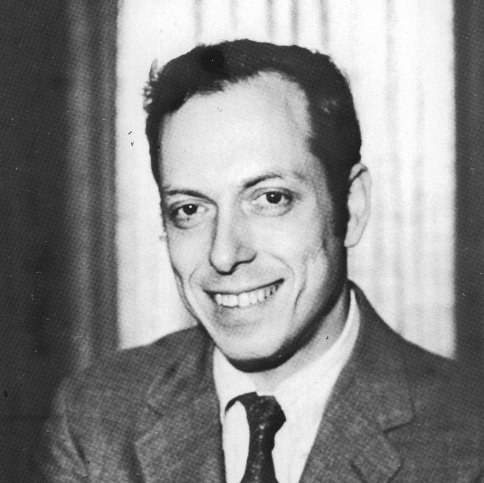
John C. Polanyi

Wolf Prize Laureate in Chemistry 1982

John C. Polanyi


Affiliation at the time of the award:

University of Toronto, Canada


Award citation:

“for his studies of chemical reactions in unprecedented detail through development of the infrared chemiluminescence technique, and for envisaging the principles underlying the chemical laser”.


Prize share:

John C. Polanyi

George C. Pimentel


Professor John Charles Polanyi has made outstanding contributions to modern chemical dynamics. In 1959 he developed the field of infrared chemiluminescence. Using this technique he was able to measure, for the first time, the distribution of individual quantum states resulting from an elementary chemical reaction. In the early sixties he predicted the infrared chemical laser. He then proceeded to develop the theory of energy disposal and of energy requirements in chemical reactions. He succeeded in achieving direct spectroscopic detection of transition states. Through these contributions he has been a prime innovator in shaping the field of chemical dynamics, as we now know it.

Jean-Pierre Changeux

Wolf Prize Laureate in Medicine 1982

Jean Pierre Changeux


Affiliation at the time of the award:

Institut Pasteur, France


Award citation:

“for the isolation, purification and characterization of the acetylcholine receptor”.


Prize share:

Jean Pierre Changeux

Sir James W. Black

Solomon H. Snyder


Receptor sites in cell membranes are recognized to have cardinal importance in many physiological and pathological processes. Our three prize winners have each made notable contributions in this area.

Jean Pierre Changeux provided a deeper understanding of the molecular mechanisms of cholinergic neurotransmission, and the functional pathology of neurological disorders such as myasthenia gravis.