Gerard T. Hooft

Wolf Prize Laureate in Physics 1981

Gerard T. Hooft


Affiliation at the time of the award:

University of Utrecht, The Netherlands


Award citation:

“for their outstanding contributions to theoretical physics, especially in the development and application of the quantum theory of, fields”.


Prize share:

Gerard T. Hooft

Victor J. Weisskopf

Freeman J. Dyson


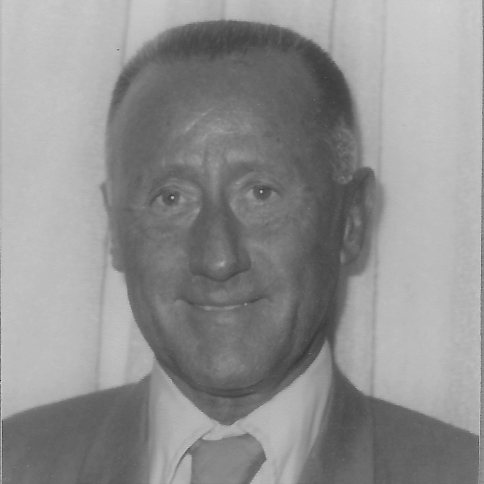
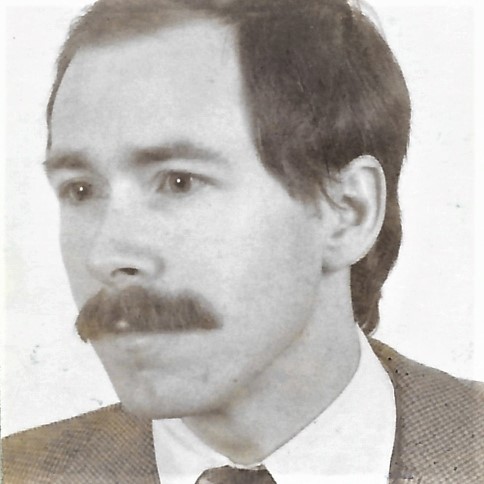
Professor Gerard T. Hooft (born in 1946, The Netherlands) has made a major contribution to the revival of quantum field theory as an essential part of our understanding of elementary particle interactions. Following earlier work by his thesis advisor, M. Veltman, in 1971 T. Hooft showed that infinities could be eliminated by renormalization in theories with spontaneously broken gauge symmetries, such as the electroweak theory of Weinberg and Salam. Together with Veltman, he then systematically developed the mathematical background for calculations in such theories, including especially the method of dimensional regularization, which has been of great value in many areas; including even quantum gravity. T. Hooft also showed how dimensional regularization could serve as the basis for renormalization group calculations, by the so-called “minimum substraction” technique. He then went on to do ground breaking work on a number of topics. He laid the foundation for systematic calculations of instanton effects, including the striking effect of baryon nonconservation. He revived interest in magnetic monopoles by showing that these particles are necessary consequences of a wide variety of gauge theories. He initiated a new approach to the calculation of physical quantities in gauge theories of strong interactions, by the “large N” approximation. Most recently, he has developed methods for deciding what sorts of, massless bound states may be expected to occur in various gauge theories, providing a mathematical basis for speculations about composite particle models of quarks and leptons. A large part of the theoretical physics of the 1970´s has been based on the seminal papers of T. Hooft.

Freeman J. Dyson

Wolf Prize Laureate in Physics 1981

Freeman J. Dyson


Affiliation at the time of the award:

Institute for Advanced Study, Princeton, U.S.A.


Award citation:

“for their outstanding contributions to theoretical physics, especially in the development and application of the quantum theory of, fields”.


Prize share:

Freeman J. Dyson

Victor J. Weisskopf

Gerard T. Hooft


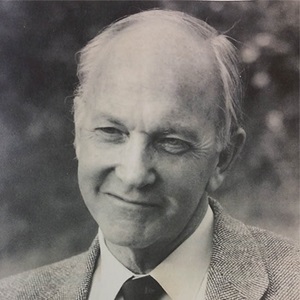
Professor Freeman J. Dyson is noted for major contributions to many different areas of physics and technology in which he has made effective use of his deep knowledge of mathematics. In early work, he showed that the apparently different approaches of Tomonaga, Schwinger and Feynman to quantum electrodynamics were internally consistent and led to the same results. Shortly after he proved that divergences of the theory would be removed in every order of perturbation theory by incorporating them in the renormalized charge and mass of electron. In these works, Dyson developed an elegant mathematical method, based on the V-matrix, which has become basic to more general field theories as well as to the many-body problem, of the physics of condensed matter.

In classic work with A. Lenard, he proved the stability of matter that the attractive force between electrons and the positive nuclei does not cause matter to collapse. In another area, on the analyticity of scattering amplitudes, he obtained results fundamental to dispersion theory methods for scattering problems. His wide-ranging interests extend from biology to astrophysics, including such technological areas as nuclear reactors and solar energy. Through his writings, he has contributed greatly to the public understanding of science.

Barbara McClintock

Wolf Prize Laureate in Medicine 1981

Barbara McClintock


Affiliation at the time of the award:

Carnegie Institute of Washington, USA


Award citation:

“for her imaginative and important contributions to our understanding of chromosome structure behavior and function, and for her identification and description of transposable genetic (mobile) elements”.


Prize share:

Barbara McClintock

Stanley N. Cohen


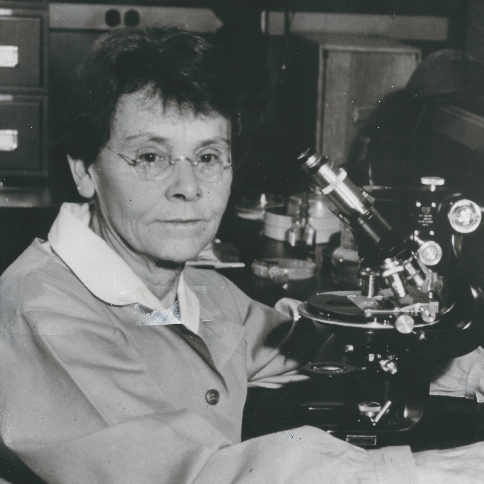
Dr. Barbara McClintock is recognized for her imaginative and important contributions to our understanding of chromosome structure, behavior and function. Her early work established many of the properties of chromosomes, including the cytological proof that genetic recombination involves a physical crossing over of homologous chromosomes. Her most brilliant contribution, however, has been her identification and description of transposable (mobile) genetic elements.

These are now known to exist in bacteria, lower eukaryotes, higher plants and animals.
They are, in all probability, ubiquitous. Thirty years ago, McClintock had already identified and described the basic behavior of transposable elements: that they can move from place to place in the genome, that they can disrupt expression of a gene by insertion in or near the gene, that gene expression can be restored fully or partially when the element is removed by transposition and that they are involved in the production of unidirectional deletions and a number of other types of chromosomal rearrangements. Recent studies have confirmed that the transposable elements of yeast and bacteria share all of these properties.

Glenn W. Salisbury

Wolf Prize Laureate in Agriculture 1981

Glenn W. Salisbury


Affiliation at the time of the award:

University of Illinois, USA


Award citation:

“for his outstanding achievements in basic-and-applied research on artificial insemination”.


Prize share:

Glenn W. Salisbury

Henry A. Lardy

John O. Almquist


While working at Cornell University and the University of Illinois, Salisbury did extensive research on semen extendors, number of sperm per insemination, and insemination techniques. His contributions have been pivotal in the resolution of problems limiting successful reproduction following artificial insemination. He is known for his ability to stimulate thinking and interest in his field and for his bold scientific approach to the problems facing the animal industry.

Michael E. Fisher

Wolf Prize Laureate in Physics 1980

Michael E. Fisher


Affiliation at the time of the award:

Cornell University, USA


Award citation:

“for path breaking developments culminating in the general theory of the critical behavior at transitions between the different thermodynamic phases of matter”.


Prize share:

Michael E. Fisher

Kenneth G. Wilson

Leo P. Kadanoff


The set of theoretical ideas, which these three men have had the central roles in developing are of the most fundamental importance to physics and chemistry. They constitute the long hoped-for solution, in an unexpected and exciting form, to questions about critical points and critical fluctuations first formulated in the early 1930´s and later brought into sharper focus by an increasing body of experimental data and numerical analyses, much of it done by or under the stimulus of Fisher. To chemistry these ideas contribute new insights to the nature of thermodynamic phases as well as the solution of one of its oldest problems; to physics a new and elegant methodology which Kadanoff and especially Wilson have shown to be relevant to many important and apparently unrelated problems of quantum physics, especially the gauge theory of strong interactions between elementary particles and the quantum theory of magnetic impurity systems. The power and generality of this new conceptual structure is only beginning to be properly tested by these extensions to new fields.

Professor Michael E. Fisher has been an extraordinarily productive scientist, and one still at the height of his powers and creativity. Fisher´s major contributions have been in equilibrium statistical mechanics, and have spanned the full range of that subject. He was mainly responsible for bringing together, and teaching a common language to, chemists and physicists working on diverse problems of phase transitions.


Leo Sachs

Wolf Prize Laureate in Medicine 1980

Leo Sachs


Affiliation at the time of the award:

The Weizmann Institute of Science, Israel


Award citation:

“for their contributions to knowledge of the function and disfunction of the body cells through their studies on the immunological role of the lymphocytes, the development of specific antibodies and the elucidation of mechanisms governing the control and differentiation of normal and cancer cells”.


Prize share:

Leo Sachs

Sir James L. Gowans

César Milstein


Professor Leo Sachs is one of the leading pioneers in cancer research and cell biology. He has made original and pioneer contributions to elucidating the control of growth and differentiation in normal and cancer cells. His pioneering achievements in the use of cells in culture, to study the differentiation of normal and malignant white blood cells and the change of normal into cancer cells by chemicals, x-irradiation and DNA viruses, have opened completely new approaches to research in this field. Professor Sachs has trained many students and founded new schools of biology in Israel and abroad.

Leo P. Kadanoff

Wolf Prize Laureate in Physics 1980

Leo P. Kadanoff


Affiliation at the time of the award:

University of Chicago, USA


Award citation:

“for path breaking developments culminating in the general theory of the critical behavior at transitions between the different thermodynamic phases of matter”.


Prize share:

Leo P. Kadanoff

Michael E. Fisher

Kenneth G. Wilson


The set of theoretical ideas, which these three men have had the central roles in developing are of the most fundamental importance to physics and chemistry. They constitute the long hoped-for solution, in an unexpected and exciting form, to questions about critical points and critical fluctuations first formulated in the early 1930’s and later brought into sharper focus by an increasing body of experimental data and numerical analyses, much of it done by or under the stimulus of Fisher. To chemistry these ideas contribute new insights to the nature of thermodynamic phases as well as the solution of one of its oldest problems; to physics a new and elegant methodology which Kadanoff and especially Wilson have shown to be relevant to many important and apparently unrelated problems of quantum physics, especially the gauge theory of strong interactions between elementary particles and the quantum theory of magnetic impurity systems. The power and generality of this new conceptual structure is only beginning to be properly tested by these extensions to new fields.

Professor Leo P. Kadanoff has made excellent theoretical research, which he is still carrying on, in several fields of physics, but more particularly on phase transitions and critical-point phenomena. The latter work was seminal to an understanding of these matters, inspiring a great deal of further study by many theorists.

Kenneth G. Wilson

Wolf Prize Laureate in Physics 1980

Kenneth G. Wilson


Affiliation at the time of the award:

Cornell University, USA


Award citation:

“for path breaking developments culminating in the general theory of the critical behavior at transitions between the different thermodynamic phases of matter”.


Prize share:

Kenneth G. Wilson

Michael E. Fisher

Leo P. Kadanoff


The set of theoretical ideas, which these three men have had the central roles in developing are of the most fundamental importance to physics and chemistry. They constitute the long hoped-for solution, in an unexpected and exciting form, to questions about critical points and critical fluctuations first formulated in the early 1930’s and later brought into sharper focus by an increasing body of experimental data and numerical analyses, much of it done by or under the stimulus of Fisher. To chemistry these ideas contribute new insights to the nature of thermodynamic phases as well as the solution of one of its oldest problems; to physics a new and elegant methodology which Kadanoff and especially Wilson have shown to be relevant to many important and apparently unrelated problems of quantum physics, especially the gauge theory of strong interactions between elementary particles and the quantum theory of magnetic impurity systems. The power and generality of this new conceptual structure is only beginning to be properly tested by these extensions to new fields.

Professor Kenneth G. Wilson Wilson’s work is characterized by astonishing range and depth. His research and discoveries have revealed hitherto unperceived connections between several areas of great interest to contemporary physics. His major works have ranged over areas that had appeared to be totally disconnected. in each of which he has made major advances, most particularly in the field of phase transitions where his work has revolutionized the subject.

Karl Maramorosch

Wolf Prize Laureate in Agriculture 1980

Karl Maramorosch


Affiliation at the time of the award:

Rutgers University, USA


Award citation:

“for his pioneering and wide-ranging studies on interactions between insects and disease agents in plants”.


Prize share:

None


Dr. Karl Maramorosh (born in 1915, Austria) has made outstanding contributions to an understanding of the interrelationships of plant diseases, their insect vectors and the pathogens that cause them, notably to the long contested problem of whether or not plant viruses can replicate within their insect vectors. He then turned his attention to viruses, which infect insects and can thus be utilized for the microbiological control of insect pests.

His pioneering studies with the novel ultramicroscopical agents, the mycoplasmas and spiroplasmas, once· thought erroneously to be viruses, have demonstrated unequivocally their importance as disease-producing agents in citrus and other crops.

This research has led to the study of these new pathogens far beyond agriculture, namely in human disease. In addition to these interdisciplinary contributions embracing three major areas of disease and its control, Dr. Maramorosch has found time to publish, or edit, some 25 major works on comparative virology methods in virology, diseases of tropical legumes and the roles of insects, viruses and other ultramicroscopical disease agents in agriculture, ecology and medicine. His world-wide influence on concepts in crop protection through his original papers and his books has been further enhanced by his notable leadership at numerous major scientific meetings devoted to viruses, mycoplasmas, the role of insects as vectors, and diseases of insects.

James L. Gowans

Wolf Prize Laureate in Medicine 1980

Sir James L. Gowans


Affiliation at the time of the award:

Medical Research Council, UK


Award citation:

“for their contributions to knowledge of the function and disfunction of the body cells through their studies on the immunological role of the lymphocytes, the development of specific antibodies and the elucidation of mechanisms governing the control and differentiation of normal and cancer cells”.


Prize share:

Sir James L. Gowans

Leo Sachs

César Milstein  


Professor Sir James L. Gowans demonstrated that lymphocytes circulate continuously around the body and the route by which they do so. Modern concepts of the functional anatomy of lymphoid tissues, and of the distinct pathways taken by subsets of lymphocytes, is another area of his important contribution, which has had an impact in fields as leukemia, autoimmune diseases, dermatology and prophylactic immunization.