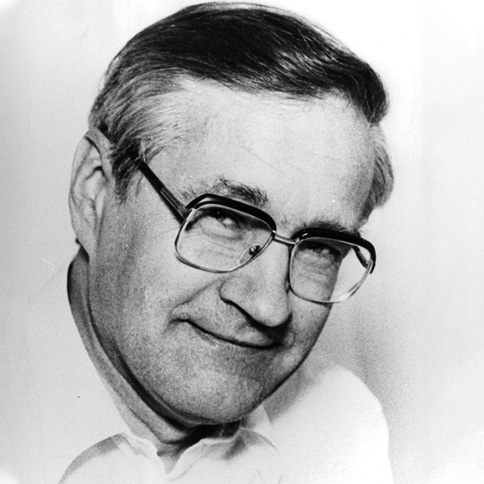
Yehudi Menuhin

Wolf Prize Laureate in Music 1991

Sir Yehudi Menuhin


Award citation:

“One of the greatest violinists of the 20th century, his unforgettable interpretations and humanitarian activities contributed significantly to bringing nations together through musical education, enlightening peoples and elevating cultural levels throughout the world”.


Prize share:

Sir Yehudi Menuhin

Luciano Berio 


Sir Yehudi Menuhin’s name fills a whole period of the music history. The most famous child prodigy of the 20th century, he went on in his professional career to bring joy and understanding to all.

His unforgettable interpretations not only had great professional impact but also meant love and kindness. In this sense, it can be said that Menuhin is one of the great humanitarians who have contributed much to bring nations together.

His name is also always connected with those institutions whose activities are directed to musical education, enlightenment of peoples and elevation of the cultural level of humanity.


Seymour Benzer

Wolf Prize Laureate in Medicine 1991

Seymour Benzer


Affiliation at the time of the award:

California Institute of Technology
Pasadena, California, USA


Award citation:

“for having generated a new field of molecular neurogenetics by his pioneering research on the dissection of the nervous system and behavior by gene mutations”.


Prize share:

None


Seymour Benzer (born in 1921, USA) developed an interest in science when a relative gifted him a microscope for his Bar Mitzvah. His curiosity led him to examine various specimens under the microscope, including flies, not knowing yet about the remarkable discoveries he would later make about the intricacies of their brain function. Awarded a Regents Scholarship to Brooklyn College in 1938, Seymour became the first in his family to attend college, focusing his studies on physics.

In 1967 Professor Seymour Benzer, already famous for mapping the fine structure of a bacteriophage gene, discovered that exposure of a population of Drosophila to a mutagen generated an extraordinary variety of mutants affecting various aspects of behavior. This discovery led him to the use of single gene mutations to dissect the complex mechanisms involved in the development and function of the nervous system. Benzer and associates identified mutations affecting visual reception, circadian rhythm, memory, excitable membrane channels, synaptic function, and the development of the photoreceptor cell lattice of the compound eye, as well as hereditary pathological defects analogous to human disorders, such as photoreceptor, muscle and brain degeneration. These are under intensive study in laboratories worldwide, which led to the genes being cloned, sequenced, and their functions determined. Benzer continues to work at the cutting edge of molecular neurobiology, with the development of widely used monoclonal antibody probes for proteins involved in neural differentiation.

Due to Benzer’s pioneering discoveries, Drosophila has become the key model system for molecular neurogenetics. Many of the genes discovered have closely homologous counterparts in humans, allowing one to localize their expression and comparison of defects in the human brain, thus opening the way to use the knowledge obtained with Drosophila to unravel similar mechanisms in man.


Richard R. Ernst

Wolf Prize Laureate in Chemistry 1991

Richard R. Ernst


Affiliation at the time of the award:

Swiss Federal Institute of Technology (ETH), Switzerland


Award citation:

“for their revolutionary contributions to NMR spectroscopy, especially Fourier-transform and two-dimensional NMR by Ernst, and multiple-quantum and high-spin NMR by Pines”.


Prize share:

Richard R. Ernst

Alexander Pines


Richard R. Ernst (born in 1933, Switzerland) initially aspired to become a composer, however, at the age of 13 his plans took a different turn when he discovered a box of chemicals in the attic, left by a late uncle. Intrigued, he started conducting experiments, and his interest in chemistry was ignited. Following his studies in chemistry at the Swiss Federal Institute of Technology (ETH) in Zurich, Ernst delved into doctoral studies in the emerging field of NMR (Nuclear Magnetic Resonance).

The field of Nuclear Magnetic Resonance (NMR), which revolutionized the practice of chemistry during the fifties and sixties, has undergone more recently far-reaching developments that have vastly expanded its usage to hitherto inaccessible systems and have had numerous implications in the pharmaceutical and chemical industries, in medical diagnosis, and in materials science. Foremost leaders in conceiving and implementing these prominent achievements are Richard Ernst and Alexander Pines, who have consistently and creatively pointed the way for others to follow.

Professor Richard R. Ernst brought about in 1965 a complete change in the practice of NMR that has dramatically increased its usage by transforming NMR spectroscopy from the frequency domain to the time domain by Hans of Fourier-transform techniques. This innovation opened up the field to the study of biomolecules and of low-sensitivity nuclei in liquid solutions. During the seventies, he literally added a second dimension to NMR spectroscopy, thus leading to its unprecedented success as one of the most versatile techniques in chemistry, physics, biochemistry and biology. Two-dimensional NMR developed by Ernst enabled several groups using Ernst’s methods to obtain three-dimensional structures of biomolecules in solution. The resulting technique for obtaining NMR images in an efficient way is exploited today in most NMR imaging systems widely used for medical diagnostics. Many other innovations of Ernst were rapidly introduced into commercial instruments that are in widespread use throughout the world.


Maurice Goldhaber

Wolf Prize Laureate in Physics 1991

Maurice Goldhaber


Affiliation at the time of the award:

Brookhaven National Laboratory, USA


Award citation:

“for their separate seminal contributions to nuclear and particle physics, particularly those concerning the weak interactions involving leptons”.


Prize share:

Maurice Goldhaber

Valentine L. Telegdi  


Maurice Goldhaber (born in 1911, Ukraine) studied physics at the University of Berlin. He completed his doctorate at Cambridge University in 1936, being affiliated with Magdalene College.

Goldhaber’s and Telegdi’s studies in nuclear physics and the weak interactions are characterized by their incisive quality as well as the elegance of their conceptual formulation and execution.

Among Professor Maurice Goldhaber’s investigations are- the photodisintegration of the deuteron with Chadwick (1935); the dipole vibrations of the nucleus with Teller (1948) which explained the giant electric dipole resonances in nuclei and which was the first of a number of collective motions of the nucleus which have been subsequently observed; the classification of nuclear isomers and their elucidation via the shell model (1951); the measurement of the helicity of the electron neutrino with Grodzins and Sunyar (1958) emitted in K capture leading to the formation of an excited state of 152Sm which decays electromagnetically to its ground state; he entertained the possibility in 1978-1979 that the proton may decay with a very long lifetime and became a driving force in the attempt to observe it experimentally.

Each of these examples has been of great importance to the development of nuclear and weak interaction physics. The measurement of the helicity of the neutrino demonstrated unequivocally the nature of the weak interactions in nuclei. It was a particularly beautiful experiment as it directly connected the helicity of the neutrino with the observable helicity of the photon emitted in the decay of the excited state of 152Sm.

Goldhaber has always had an active interest in the status of the symmetries and selection rules of the fundamental interactions. An example is the proton decay experiment. As of 1989, this study showed that the decay rate was less than 10 -33/proton years. This research result excluded a number of “Grand Unified Theories”, which proposed to unify the quark and lepton degrees of freedom.


Luciano Berio

Wolf Prize Laureate in Music 1991

Luciano Berio


Award citation:

“One of the greatest composers of our generation, he is also recognized and admired worldwide as interpreter, conductor, Iecturer and writer whose new ideas, in an age of devaluation of human values, help to bring closer nations, cultures and generations”.


Prize share:

Luciano Berio 

Sir Yehudi Menuhin


Luciano Berio, one of the great thinkers with a very wide field of creation, is undoubtedly one of the foremost composers of our generation, particularly noted for innovations in electronic music.

Berio is respected and admired worldwide for his achievellef1ts as interpreter, conductor, lecturer and writer.

His manifold activities, in an age of devaluation of human values, communicate new ideas and help to unify nations, cultures and generations.

Alexander Pines

Wolf Prize Laureate in Chemistry 1991

Alexander Pines


Affiliation at the time of the award:

University of California, USA


Award citation:

“for their revolutionary contributions to NMR spectroscopy, especially Fourier-transform and two-dimensional NMR by Ernst, and multiple-quantum and high-spin NMR by Pines”.


Prize share:

Alexander Pines

Richard R. Ernst


Alexander Pines (born in 1945, Israel) grew up in Rhodesia (now Zimbabwe) and studied undergraduate mathematics and chemistry in The Hebrew University of Jerusalem, Israel.  Coming to the United States in 1968, Pines obtained his Ph.D. in chemical physics at M.I.T. in 1972  and joined the Berkeley faculty later that year.

The field of Nuclear Magnetic Resonance (NMR), which revolutionized the practice of chemistry during the fifties and sixties, has undergone more recently far-reaching developments that have vastly expanded its usage to hitherto inaccessible systems and have had numerous implications in the pharmaceutical and chemical industries, in medical diagnosis, and in materials science. Foremost leaders in conceiving and implementing these prominent achievements are Richard Ernst and Alexander Pines, who have consistently and creatively pointed the way for others to follow.

Professor Alexander Pines, while still a graduate student, helped engineer in 1972 (together with John Waugh) one of the most important revolutions in modern NMR. Their cross-polarization magic-angle spinning technique opened the field of solid-state NMR to applications of enormous impact in materials science. His later works in Berkeley have continued to profoundly influence modern NMR spectroscopy. Among his most notable achievements is the method of selective multiple-quantum excitations, which has led to a truly coherent picture of nuclear spin dynamics, and has opened up new exciting possibilities for studying the structures of molecules and molecular clusters in solids. More recently, Professor Pines has led another fundamental development in NMR. By introducing the techniques of dynamic-angle spinning and double-rotation, he was able to extend high-resolution solid-state NMR to nuclei with spins higher than one half, where resolutions have been severely impeded by quadrupole effects. His brilliant solution allowed, for the first time, access to various nuclei of critical importance to the study of materials of high interest for technological and catalytic uses.

Shang-Fa Yang

Wolf Prize Laureate in Agriculture 1991

Shang-Fa Yang


Affiliation at the time of the award:

University of California, USA


Award citation:

“for remarkable contributions to the understanding of the mechanism of biosynthesis, mode of action and applications of the plant hormone, Ethylene”.


Prize share:

None


Shang-Fa Yang (born in 1932, Taiwan) received his bachelor’s and master’s degrees in agricultural chemistry from the National Taiwan University. He then pursued his doctoral degree in plant biochemistry at Utah State University in the United States. Following the completion of his PhD, he engaged in postdoctoral research at the University of California, Davis, New York Medical School, and the University of California, San Diego. In 1966, Shang-Fa Yang became a faculty member at the University of California, Davis.

Professor Shang-Fa Yang has studied the pathway of ethylene biosynthesis and proved unequivocally the central role of methionine as a precursor of ethylene. Ethylene represents one of the five major hormones affecting plant development and maturation.

Yang was the first to report S-adenosylmethionine as an intermediate in methionine conversion to ethylene. Later in 1979, he discovered aminocylopropane-1-carboxylic acid (ACC) as an intermediate. The discovery of ACC-synthase opened the way to the understanding of the regulating process of ethylene biosynthesis. Moreover, the finding of malonyl-ACC was followed by the understanding of the mechanism of autocatalytic production and suppression of this hormone in the plant tissues.

This research has also opened up further investigations leading to the understanding of ethylene action. At the same time these studies have emphasized the important role played by ethylene in plant growth, development and senescence. This enhanced the application of ethylene in agriculture mainly for optimization of fruit ripening and inhibition of abscission of leaves and flowers. These findings have significantly contributed to economic benefits by prolonging shelf life of fruits, flowers and vegetables after harvest.

Since ethylene has such profound effects, genetic modification of the ACC synthase will now permit scientists to regulate the production of ethylene for prolonging the life span of plants and the modification of flower and fruit development, thus leading to even greater economic advantages for food production.

Pierre-Gilles de Gennes

Wolf Prize Laureate in Physics 1990

Pierre-Gilles de Gennes


Affiliation at the time of the award:

College de France, France


Award citation:

“for a wide variety of pioneering contributions to our understanding of the organization of complex condensed matter systems, de Gennes especially for his work on macromolecular matter and liquid crystals and Thouless for his on disordered and low-dimensional systems”.


Prize share:

Pierre-Gilles de Gennes

David J. Thouless 


Among his important contributions to many different parts of condensed matter physics, including magnetism, superconductivity and scattering studies, Professor Pierre-Gilles de Gennes has provided fundamental concepts for the development of macromolecular science. These have provided a firm foundation for analyzing complicated but important processes. He analyzed the dynamics of correlated motions of polymers in their complex environment and predicted their critical phenomena by extending the use of path-integral methods, developing applications of scaling ideas and introducing the concept of reptation. This work has stimulated many experiments which have confirmed his concepts and their relevance. It has energized the whole field of the physics of long chained macromolecules, much of the new work being done by former students and young colleagues. These achievements also hold promise for future applications to biological systems.


Maclyn McCarty

Wolf Prize Laureate in Medicine 1990

Maclyn McCarty


Affiliation at the time of the award:

Rockefeller University, USA


Award citation:

“for his part in the demonstration that the transforming factor in bacteria is due to deoxyribonucleic acid (DNA) and the concomitant discovery that the genetic material is composed of DNA”.


Prize share:

None


Maclyn McCarty (born in 1911, USA) has been associated with Rockefeller Institute since 1941. He is a graduate of Stanford University, received his M.D fron Johns Hopkins University in 1937, and was a fellow of medicine at New York University.

In the 1940’s when Drs. Avery, Macleod and McCarty first began to work on transformation of pneumococcus, not very much was known about the chemical nature of genetic material. It was known that heredity is determined by chromosomes and that c chromosomes contain DNA and proteins in about equal amounts. Since proteins are complex molecules composed of many different amino acids, while DNA is composed of only four different nucleotides, the general feeling in the early 1940’s was that proteins were intrincate enough to contain the genetic information, and DNA with its simplistic structure was considered to be almost irrelevant to genetics. Drs. Avery, Macleod and McCarty studied the two types of pneumococci giving rough and smooth colonies. They succeeded in making extracts of one bacterial type and to treat cells of the other bacterial type with the extracts, with the result that bacteria previously giving rough colonies now gave smooth colonies. This change of phenotype was called transformation. Although the chemistry of proteins and nucleic acids was not particularly developed at that time, McCarty was able to show that the only material required for transformation was deoxyribonucleic acid. These papers, published in 1944 and 1945, laid the foundation of our knowledge on the chemical basis of genetic information.

It is also not too much to say, that modern molecular biology is totally dependent on the knowledge of what the genetic material is. When it became known that it was deoxyribonucleic acid, it then became possible to do a whole variety of experillel1ts which have led to precise identification of the structure and functions of many genes in a variety of species, including man. Molecular genetic research carried out in the past decades fundamentally broadened our understanding of the processes of life.

Ilya Piatetski-Shapiro

Wolf Prize Laureate in Mathematics 1990

Ilya Piatetski-Shapiro


Affiliation at the time of the award:

Tel Aviv University, Israel


Award citation:

“for his fundamental contributions in the fields of homogeneous complex domains, discrete groups, representation theory and automorphic forms”.


Prize share:

Ilya Piatetski-Shapiro

Ennio De Giorgi 


Ilya Piatetski-Shapiro (born in 1929, Russia) developed a fascination for mathematics at the age of 10. His curiosity was ignited by the  unique beauty of negative numbers, a subject introduced to him by his father, a Ph.D. in chemical engineering. While still an undergraduate at Moscow University, Piatetski-Shapiro’s mathematical prowess earned him the Moscow Mathematical Society Prize for a Young Mathematician in 1952. The winning paper he presented contained a solution to the problem posed by the French analyst Raphaël Salem regarding sets of uniqueness of trigonometric series.

For almost 40 years Professor Ilya Piatetski-Shapiro has been making major contributions in mathematics by solving outstanding open problems and by introducing new ideas in the theory of automorphic functions and its connections with number theory, algebraic geometry and infinite dimensional representations of Lie groups. His work has been a major, often decisive factor in the enormous progress in this theory during the last three decades.

Among his main achievements are: the solution of Salem’s problem about the uniqueness of the expansion of a function into a trigonometric series; the example of a non symmetric homogeneous domain in dimension 4 answering Cartan´s question, and the complete classification (with E. Vinberg and G. Gindikin) of all bounded homogeneous domains; the solution of Torelli´s problem for K-3 surfaces (with I. Shafarevich); a solution of a special case of Selberg´s conjecture on unipotent elements, which paved the way for important advances in the theory of discrete groups, and many important results in the theory of automorphic functions, e.g., the extension of the theory to the general context of semi-simple Lie groups (with I. Gelfand), the general theory of arithmetic groups operating on bounded symmetric domains, the first “converse theorem” for GL(3), the construction of L-functions for automorphic representations for all the classical groups (with S. Rallis) and the proof of the existence of non arithmetic lattices in hyperbolic spaces of arbitrary large dimension (with M. Gromov).