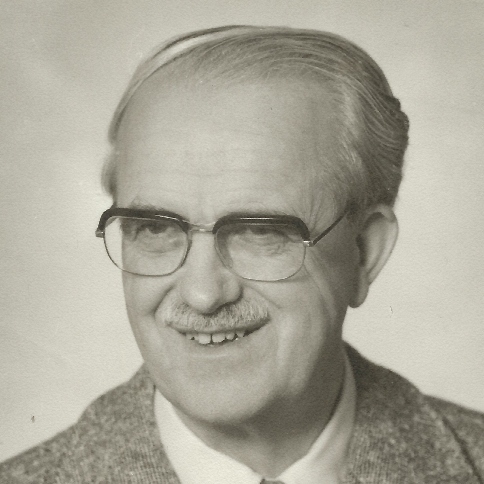
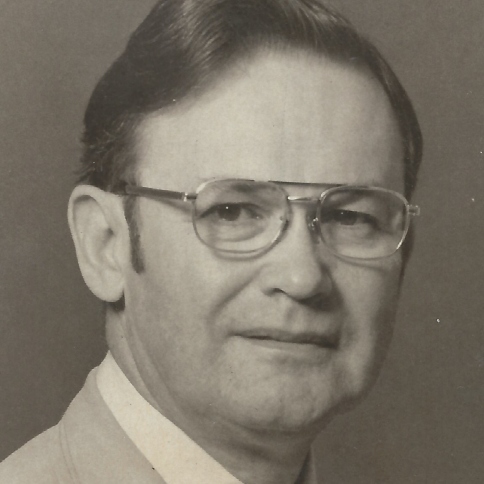
Hassler Whitney

Wolf Prize Laureate in Mathematics 1982

Hassler Whitney


Affiliation at the time of the award:

Institute for Advanced Study, USA


Award citation:

“for his fundamental work in algebraic topology, differential geometry and differential topology”.


Prize share:

Hassler Whitney

Mark G. Krein  


The innovative ideas of Professor Hassler Whitney have been the seed from which contemporary work in combinatorics, topology and differential geometry have grown to maturity. Matroids, differentiable manifolds, fiber bundles, characteristic classes, classifying spaces, stratifications, rational homotopy are only some of the concepts that trace their parentage to Whitney. His work inaugurates the style of geometric and combinatorial reasoning that has become the standard for the second half of the Twentieth Century.

George C. Pimentel

Wolf Prize Laureate in Chemistry 1982

George C. Pimentel


Affiliation at the time of the award:

University of California, USA


Award citation:

“for development of matrix isolation spectroscopy and for the discovery of photodissociation lasers and chemical lasers”.


Prize share:

George C. Pimentel

John C. Polanyi


Professor George Claude Pimentel has made pioneering contributions to molecular spectroscopy and laser chemistry. In 1954 he developed the matrix isolation technique by which spectra of free radicals and unstable molecules at very low temperatures can be detected. In 1964-1965 Pimentel created the first photodissociation and chemical lasers. These are amongst the most efficient and powerful lasers known. The chemical laser was subsequently developed by Pimentel and collaborators as a most sensitive tool for the microscopic elucidation of chemical reaction processes. Both chemical lasers and the iodine photodissociation laser figure importantly in current efforts to achieve power generation by laser induced nuclear fusion reactions.

Wendell L. Roelofs

Wolf Prize Laureate in Agriculture 1982

Wendell L. Roelofs


Affiliation at the time of the award:

New York State Agricultural Experiment Station, College of Agriculture and Life Sciences, Cornell University, USA


Award citation:

“for his fundamental chemical and biological research on pheromones and their practical use in insect control”.


Prize share:

None


Wendell L. Roelofs (born in 1938, USA) has made outstanding contributions to fundamental knowledge of insect pheromones and carried out clear demonstrations of the potential value of pheromones in the development of more efficient and environmentally acceptable strategies for the control of pest insects. His original scientific findings may be applied, with success, to the monitoring and control of insect pests damaging to crops or livestock. Practical application of the results of this scientific research in ways benefiting humanity is then on records in a field of immense importance to the whole world: insect damage to crops during growth, or after harvest under poor storage conditions, produce losses variously estimated as between 20% and 50% of the potential harvest.

Pheromones are specific chemical compounds emitted by insects, which affect the behavior of other individuals of the same species. These compounds are responsible for the communication between conspecific insects. The most known ones are the sex pheromones, which are released by the young female insects, dispersed in space and attract males from distances of hundreds of meters.

Following the chemical identification of a number of such pheromones and the study of the biological activity, the road was open for implementation of this knowledge in two major practical ways: a) monitoring of insect pest populations by means of pheromone-baited traps and dispensers, whether of natural or synthetic origin. b) direct insect control by mass trapping, using traps as mentioned above and/or by disruption of the chemical communication of the insect population through over saturation of the environment with an overdose of pheromone preparations. Thus serious pests can be suppressed without recourse to dangerous toxic pesticides.

In various countries, including Israel, such methods are already applied inter alia for the control of major cotton pests, as well as in fruit tree orchards and citrus groves.
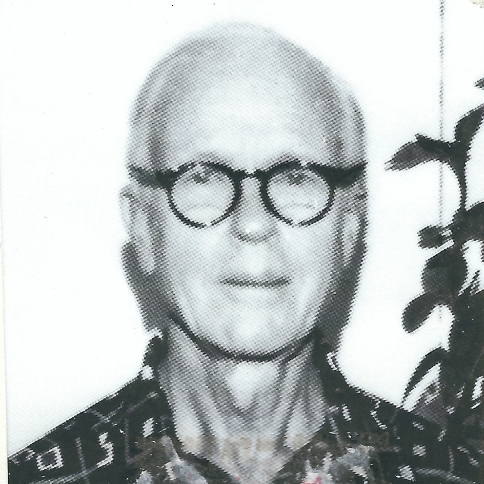
Victor J. Weisskopf

Wolf Prize Laureate in Physics 1981

Victor J. Weisskopf


Affiliation at the time of the award:

Massachusetts Institute of Technology, U.S.A.


Award citation:

“for their outstanding contributions to theoretical physics, especially in the development and application of the quantum theory of, fields”.


Prize share:

Victor J. Weisskopf

Gerard T. Hooft

Freeman J. Dyson


The activity of Professor Victor F. Weisskopf (born in 1908, Austria) extends over a period of more than 50 years and covers two subfields of theoretical physics: quantum field theory and theoretical nuclear physics. Furthermore, he has gained a reputation as an international statesman In quantum field theory his main contributions include an early recognition that the incorporation of the positron in quantum electrodynamics eased to a large extent the self-energy difficulties and that infinities might be removed by renormalization of the electron’s mass and charge. Also, in collaboration with Pauli, he formulated the correct quantization method for boson fields and gave the proper method for extending to bosons the concept of antiparticles. These chievements make him one of the pioneers of quantum field theory.

In nuclear physics he successfully applied thermodynamical methods to Bohrs compound nucleus model obtaining many semiquantitative results that guided the art for years. Furthermore, he analyzed with H. Feshbach and C. Porter neutron nucleus scattering. Introducing statistical methods, founded on quantum mechanics, that have been successfully applied in several different contexts even outside of the nuclear field.

As Director of CERN and on many other occasions he has shown considerable diplomatic ability addressed to improve international relations in science, fostering, to quote the statute of the Wolf Foundation, humanity and brotherly relationships amongst the peoples.

Stanley N. Cohen

Wolf Prize Laureate in Medicine 1981

Stanley N. Cohen


Affiliation at the time of the award:

Stanford University, School of Medicine, USA


Award citation:

“for his concepts underlying genetic engineering; for constructing a biologically functional hybrid plasmid, and for achieving actual expression of a foreign gene implanted in E. Coli by the recombinant DNA method”.


Prize share:

Stanley N. Cohen

Barbara McClintock


Although a number of workers have contributed to the concepts underlying genetic engineering based on recombinant DNA, Professor Stanley N. Cohen and his colleagues were the first to construct, in 1973, a biologically functional hybrid plasmid and in the following year to achieve actual expression of a foreign gene implanted in E. coli by the recombinant DNA method. Dr. Cohen has exercised a central and seminal role in discovering and developing this methodology, and in demonstrating its usefulness for analysing complex genetic elements, and for obtaining expression of foreign genes in bacterial cells.

Oscar Zariski

Wolf Prize Laureate in Mathematics 1981

Oscar Zariski


Affiliation at the time of the award:

Harvard University, USA


Award citation:

“Creator of the modern approach to Algebraic geometry, by its fusion, with Commutative algebra”.


Prize share:

Oscar Zariski

Lars V. Ahlfors


Professor (Emeritus) Oscar Zariski harnessed the power of modern algebra to serve the needs of algebraic geometry. This made possible to do algebraic geometry over arbitrary fields and to apply it to deep problems in number theory. Zariski put algebraic geometry on a secure foundation, retaining the intuitive language and insight of the Italian school, in whose tradition, he was trained. He showed that purely algebraic notions, like local rings, valuations, normality, etc., are intimately connected with basic properties of algebraic ,varieties. His wonderful algebraic intuition led him to a number of fundamental theorems and concepts, including the resolution of singularities in two and three dimensions in characteristic zero, minimal models and criterion of rationality in dimension two, the “Zariski topology”, holomorphic functions in abstract algebraic geometry, the connectedness theorem and the famous “Zariski main theorem”.

Zariski’s papers and teachings had a tremendous impact. Algebraic geometry is one of the most active fields in modern mathematics, and perhaps half of its leading practitioners are his former students. He is a leader in studying equi-singularity, a concept he created.

Lars V. Ahlfors

Wolf Prize Laureate in Mathematics 1981

Lars V. Ahlfors


Affiliation at the time of the award:

Harvard University, USA


Award citation:

“for seminal discoveries and the creation of powerful new methods in geometric function theory”.


Prize share:

Lars V. Ahlfors

Oscar Zariski


For over half a century the theory of functions of a complex variable was guided by the thought and work of Professor (Emeritus) Lars Ahlfors. His achievements include the proof of the Denjoy conjecture, the geometric derivation of the Nevanlinna theory, an important generalization of the Schwarz lemma, the development (with Beurling) of the method of extremal length, and numerous decisive results in the theories of Riemann surfaces, quasi-conformal mappings and Teichmuller spaces. Ahlfors celebrated finiteness theorem for Kleinian groups, and his work on the limit set, revitalized an important area of research. He is now doing pioneering work on quasiconformal deformations in higher dimensions.

Ahlfors influence was pervasive and beneficial. His methods combine deep geometric insight with subtle analytic skill; he presents them with utter clarity and simplicity. Time and again he attacked and solved the central problem in a discipline. Time and again other mathematicians were inspired by work he did many years earlier.

Joseph Chatt

Wolf Prize Laureate in Chemistry 1981

Joseph Chatt


Affiliation at the time of the award:

University of Sussex, United Kingdom


Award citation:

“for pioneering and fundamental contributions to synthetic transition metal chemistry, particularly transition metal hydrides and dinitrogen complexes”.


Prize share:

None


Professor Joseph Chatt (born in 1914, UK) has made outstanding pioneering contributions to modern inorganic chemistry. His name is particularly associated with the use of tertiary phosphines as ligands and the reactions of complex compounds in organic solvents. He has studied the nature of the coordinate link which led to his establishment of the Chatt-Dewar model for the binding of olefins to transition metals, and from there he developed ideas which led to the synthesis of stable transition metal alkyls and aryls, and hydrides. From these researches have grown a vast new area of organometallic and catalytic chemistry, which finds direct expression in the catalytic processes exploited in the petrochemical industry.

He also has developed theories to rationalise the trans-effect and also a classification of metal ions as Class (a) or Class (b) which provided the basis for the ‘hard’ and “soft” classification of acids and bases.

He led a varied team of scientists, which has achieved international acclaim in the study of nitrogen fixation. His chemical work has revealed the first reactions of complexed dinitrogen to yield well defined complexes, a large number of new dinitrogen complexes, and the first’ indications of a rational development of new catalytic processes for the synthesis of ammonia, hydrazine, and amines. It also offerd the first real prospect of understanding the chemistry of the natural nitrogen fixation process mediated by the enzyme nitrogenase.

John O. Almquist

Wolf Prize Laureate in Agriculture 1981

John O. Almquist


Affiliation at the time of the award:

Pennsylvania State University, USA


Award citation:

“for his significant contributions to the application of artificial insemination to livestock improvement”.


Prize share:

John O. Almquist

Henry A. Lardy

Glenn W. Salisbury


Professor Almquist’s early work on the addition of antibiotics to bull semen resulted in substantial increases in breeding efficiency. This, coupled with his remarkable achievements in developing methods for processing, freezing, and thawing of frozen semen, significantly enhanced the practical utilization of artificial insemination in the livestock industry. Many techniques developed by him for cattle have been applied to other species, including the human male.

Henry A. Lardy

Wolf Prize Laureate in Agriculture 1981

Henry A. Lardy


Affiliation at the time of the award:

University of Wisconsin, USA


Award citation:

“for his pioneering research on storage and preservation of spermatozoa thus enabling artificial insemination to become a universal practice”.


Prize share:

Henry A. Lardy

John O. Almquist

Glenn W. Salisbury


Professor Lardy, with the late Professor Paul H. Phillips, made the basic discovery in the early forties that a nutrient medium of egg yolk dispersed in a phosphate buffer forms an ideal environment for the storage of spermatozoa of bull, ram, stallion, and turkey. This breakthrough paved the way to the rapid expansion of the practical use of artificial insemination in livestock breeding. Further, the ability to store semen made it possible to initiate fundamental studies on the metabolism of spermatozoa. The results of this outstanding research work enabled improvements to semen storage technique leading to more efficient and widespread utilization of semen.