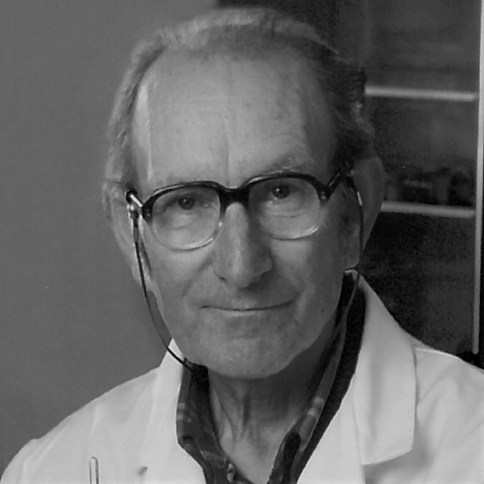
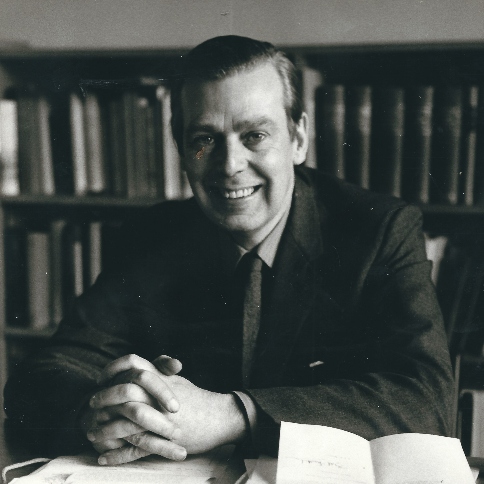
Henry Eyring

Wolf Prize Laureate in Chemistry 1980

Henry Eyring


Affiliation at the time of the award:

University of Utah, USA


Award citation:

“for his development of absolute rate theory and its imaginative applications to chemical and physical processes”.


Prize share:

None


Professor Henry Eyring has dedicated a lifetime being involved in the many ramifications of this powerful approach to chemical dynamics. He has shown that the absolute rate theory is equally valid in detonations of gases, corrosion of metal surfaces, nerve action, marine biology, etc. The list of applications rapidly becomes legion. The universality of the theory is its greatest strength.

The award of the 1980 Wolf Prize in Chemistry to Henry Eyring is a fitting and proper recognition for the work of this unique and gifted scientist. His transition state or absolute rate theory of treating chemical reaction kinetics and other rate processes has become the guiding principle behind everyday thinking in this area. The successful application by Henry Eyring of this theory to diverse phenomena in chemistry, biology, engineering, geology and physics over a fifty year period constitutes the basis for this award.

He is the holder of 15 Honorary Doctorates, has received numerous awards, has authored 590 scientific publications and is a member of a great number of Academies of Sciences and scientific associations all over the world.

Henri Cartan

Wolf Prize Laureate in Mathematics 1980

Henri Cartan


Affiliation at the time of the award:

Universite de Paris, France


Award citation:

“for pioneering work in algebraic topology, complex variables homological algebra and inspired leadership of a generation of mathematicians”.


Prize share:

Henri cartan 

Andrey N. Kolmogorov


Both mathematicians are noteworthy for their breadth of interests and for the depth of the results they have obtained in the various fields of mathematics in which they have been active. Their interests were complementary and, taken together, span almost the whole range of mathematics.

Professor (Emeritus) Henri Cartan began his career in several complex variables when, along with Oka and Thullen, he laid the foundation for the general theory, culminating in the characterization of domains of holomorphy.

During the post-war period for about 15 years, Cartan was the leader of the famous Seminaire Cartan which, attracted mathematicians from all over the world. In this seminar he also turned to algebraic topology and soon made the seminar the center of new developments in this field. The new methods which were introduced by him and by others, formed the basis of an entirely new branch of mathematics, homological algebra, which has grown beyond all expectation. In addition to the above, Cartan has contributed to various theories such as potential theory and harmonic analysis. He was one of the founding fathers of the Bourbaki Circle of French Mathematicians, who have definitely stamped the image of the present science of Mathematics.

Andrey N. Kolmogorov

Wolf Prize Laureate in Mathematics 1980

Andrey N. Kolmogorov


Affiliation at the time of the award:

Moscow State University, U.S.S.R


Award citation:

“for deep and original discoveries in Fourier analysis, probability theory, ergodic theory and dynamical systems”.


Prize share:

Andrey N. Kolmogorov

Henri cartan 


Both mathematicians are noteworthy for their breadth of interests and for the depth of the results they have obtained in the various fields of mathematics in which they have been active. Their interests were complementary and, taken together, span almost the whole range of mathematics.

The work of Professor Andrey N. Kolmogorov is characterized above all by great power. One of his first achievements was to give an example of an L1 function whose Fourier Series diverges everywhere. In addition the Kolmogorov-Seliverstov theorem remained for many years the deepest result on convergence of Fourier Series for L2 functions. However, it was his work in probability theory, which truly earned his reputation. In 1933 he wrote a fundamental book on the foundations of probability theory, which for the first time put probability theory on a completely secure footing, comparable to the rest of mathematics. He later introduced the critical concept of entropy, which enabled one to solve the famous isomorphism problem for Bernoulli shifts, and essentially revived the entire field of ergodic theory.

His interests include logic, approximation theory, and the theory of real variables, as well as many other subjects. His influence on students has also been very extensive.

César Milstein

Wolf Prize Laureate in Medicine 1980

César Milstein


Affiliation at the time of the award:

Medical Research Council, United Kingdom


Award citation:

“for their contributions to knowledge of the function and disfunction of the body cells through their studies on the immunological role of the lymphocytes, the development of specific antibodies and the elucidation of mechanisms governing the control and differentiation of normal and cancer cells”.


Prize share:

César Milstein

Leo Sachs

Sir James L. Gowans


Dr. César Milstein is one of the few immunologists who have outstanding contributions in three major areas of immunology: nucleic acids (antibody genes), proteins (immunoglobulins) and cells (lymphocytes). By fusing myeloma cells to antigen stimulated mouse lymphocytes he was able to generate continuous cell lines secreting the antibody of choice with the specificity of choice.

This discovery is an important contribution to specific serology. The technique of generating continuously growing hybrid cell lines that secrete monoclonal antibodies of defined specificity has an impact on basic research in immunology in particular and in molecular biology in general, and on clinical research.

Kenneth Blaxter

Wolf Prize Laureate in Agriculture 1979

Sir Kenneth Blaxter


Affiliation at the time of the award:

Rowett Research Institute, United Kingdom


Award citation:

“for his fundamental contributions to the science and practice of ruminant nutrition and livestock production”.


Prize share:

Sir Kenneth Blaxter

Jay L. Lush


Sir Kenneth Blaxter has spent virtually the whole of his career in the British Agricultural Research Service. Nevertheless, he has disseminated his discoveries and ideas through the media of international conferences, farming meetings and via the many visiting scientists who have worked with him at his research institutes. He is particularly distinguished for the precise and detailed studies he has made on the energy requirements of ruminants and the ways once the necessary energy has been supplied to the diet, that it is utilized in the animal’s metabolism. This has lead to a new understanding, both of the nutritional needs of the animal and of the most effective ways in which the diet may be made up and varied, and utilized most efficiently by the ruminant to produce more meat, milk or both. Thus the farmer can now control this aspect of the animal’s environment with far greater efficiency to give a higher yield at the most economical price.

His approach and practical proposals have been widely adopted throughout the world and, because he has enunciated the fundamental principles so clearly, it has proved possible to adapt or modify them to a diversity of farming systems.

Roger W. Sperry

Wolf Prize Laureate in Medicine 1979

Roger W. Sperry


Affiliation at the time of the award:

California Institute of Technology, USA


Award citation:

“for his studies on the functional differentiation of the right and left hemispheres of the brain”.


Prize share:

Roger W. Sperry

Arvid Carlsson

Oleh Hornykiewicz


These scientists had made outstanding contributions in brain physiology and physio-pathology.

Professor Roger W. Sperry is honored for his studies on the functional differentiation of the right and left hemispheres of the brain. Since 1954, Professor at the California Institute of Technology, Dr. Sperry is a member of the National Academy of Sciences, American Philosophical Society, The Royal Society and others. He received honorary doctorates from Cambridge University (1972) and from the University of Chicago (1976), and was elected California Scientist of the Year in 1972.


Oleh Hornykiewicz

Wolf Prize Laureate in Medicine 1979

Oleh Hornykiewicz


Affiliation at the time of the award:

University of Vienna, Austria


Award citation:

“for opening a new approach in the control of Parkinson’s disease by L-Dopa”.


Prize share:

Oleh Hornykiewicz

Arvid Carlsson

Roger W. Sperry


These scientists had made outstanding contributions in brain physiology and physio-pathology.

Professor Oleh Hornykiewicz receives the prize for opening a new approach in the control of Parkinson’s disease by L-Dopa. Professor of Biochemical Pharmacology at the University of Vienna and Professor at the University of Toronto, Canada, member of Professional Societies in Austria, Canada, U.S.A, Germany, etc., he has received the Gold Medal – Canadian Parkinson´s Disease Association, a Special Tribute from Columbia University, New York, and several other Prizes and awards.

Jean Leray

Wolf Prize Laureate in Mathematics 1979

Jean Leray


Affiliation at the time of the award:

College de France, France


Award citation:

“for pioneering work on the development and application of topological methods to the study of differential equations”.


Prize share:

Jean Leray

André Weil


Both these mathematicians have made outstanding contributions in many different areas of mathematics and their work has had very great impact on the development of mathematics over the past decades.

Professor (Emeritus) Jean Leray’s major contributions include his work on the equations of fluid mechanics, his use of topological methods in analytical problems, his development of entirely new techniques, which have altered the whole direction of algebraic topology, and very significant work on the theory of hyperbolic differential equations. He is a member of the Academies of Science of Paris, Belgium, U.S.A., U.S.S.R., Italy, Poland and others, and Doctor Honoris Causa of many Universities. His work is of very unusual broadness, spanning from the most abstract part of Mathematics – where Leray himself invented extremely general abstract tools – to very concrete applications and at the same time of a remarkable unity; all the new concepts and methods are applied to very specific problems taken amongst the most challenging of the science of our time.

Jay L. Lush

Wolf Prize Laureate in Agriculture 1979

Jay L. Lush


Affiliation at the time of the award:

Iowa State University, USA


Award citation:

“for his outstanding and pioneering contributions to the application of genetics to livestock improvement”.


Prize share:

Jay L. Lush

Sir Kenneth Blaxter


Professor Lush has made major contributions to unravelling the hereditary contributions to animal production whereas Dr. Blaxter has unravelled the nutritional requirements of animals, especially ruminants. Thus their work has effectively contributed to both aspects of the factors regulating animal production: the control and exploitation of the genetic endowment, and the provision of the most favorable nutritional environment in which genetic endowment can be expressed.

Jay L. Lush has one more than any agricultural scientist both to investigate the genetic basis of traits important for animal production, to assess their value and to improve them by initiating breeding programmes of proven practical effectiveness. He has been responsible for inspiring a great band of graduate students and others who have disseminated his ideas and practical suggestions throughout the world and so led to the improvement of poultry, pigs, beef and dairy cattle. His contributions are of several kinds. First, he pioneered the value to the scientific breeder of adequate measurement of the performance of individuals, their progeny and their pedigree in order to assess the genetic worth of an animal. Secondly, he pioneered the assessment of the heritability of a trait, i.e. the degree to which its expression reflected a genetic basis rather than the effects of a favorable or unfavorable environment. Thirdly, having demonstrated how the inherited potentialities could be measured and distinguished from those due to non-heritable causes, he synthesized these ideas into practical and workable animal breeding plans to promote an inherited increase in the yield of meat, milk or eggs. He has exploited his ideas as a University teacher, at a diversity of national and international gatherings and enshrined much of it in his major and most influential text “Animal Breeding Plans”. He may truly be described as the ‘father’ of scientific animal breeding in the twentieth century.

Giuseppe Occhialini

Wolf Prize Laureate in Physics 1979

Giuseppe Occhialini


Affiliation at the time of the award:

University of Milan, Italy


Award citation:

“for his contributions to the discovery of electron pair production and of the charged pion”.


Prize share:

Giuseppe Occhialini

George E. Uhlenbeck


Professor Giuseppe Occhialini has contributed to the discovery of electron pair production, jointly with P.M.S. Blackett and J. Chadwick, and to the discovery of the charged pion, jointly with C.M.G. Lattes, H. Muirhead and C.F. Powell. Giuseppe Occhialini has also contributed to major research techniques including cloud chambers triggered by counters and the use of special photographic emulsions to study cosmic rays.