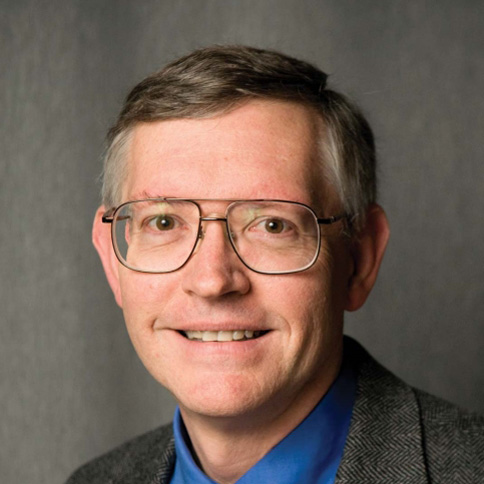
Pascal Mayer
Wolf Prize Laureate in Chemistry 2026
Pascal Mayer
Affiliation at the time of the award:
αlphanosos, University of Strasbourg, France
Award citation:
“For developing impactful, low-cost, large-scale DNA sequencing methods for genomic medicine”.
Prize share:
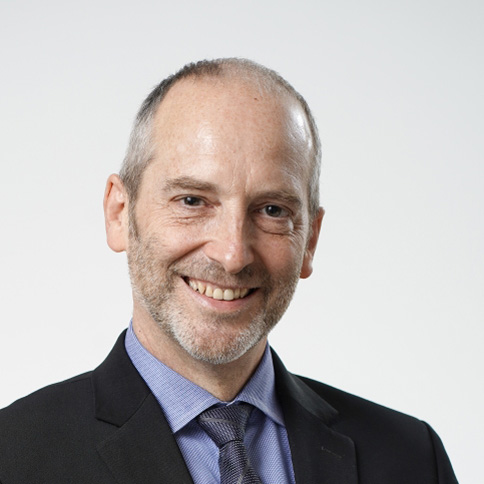
Pascal Mayer
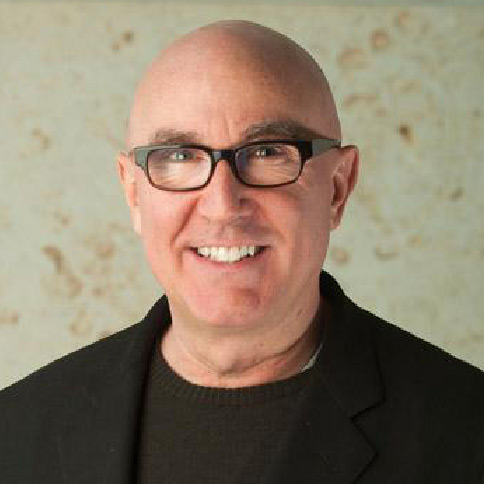
Shankar Balasubramanian
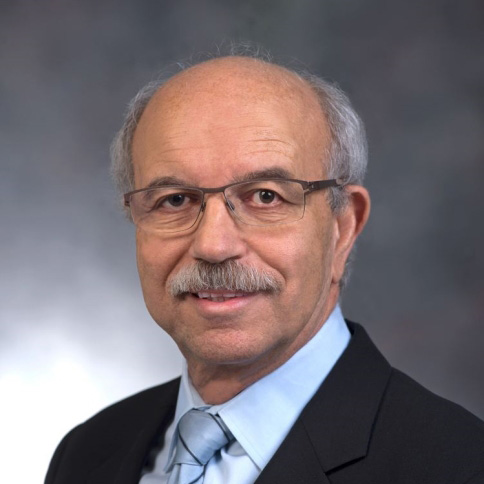
David Klenerman
Shankar Balasubramanian, David Klenerman, and Pascal Mayer contributed to the development of technology that revolutionized the way we read DNA. Their work helped lay the foundations for next-generation sequencing (NGS), enabling millions of DNA fragments to be sequenced in parallel, dramatically increasing speed while reducing costs.This technology transformed genome sequencing from an expensive and time-consuming research process into an accessible and powerful tool, helping drive the genomics revolution—from the study of disease and cancer to genetic diagnosis and the development of precision medicine.
Pascal Mayer was born in 1963, and grew up in Stiring-Wendel, a small town in France’s Moselle mining region, where many of his childhood friends expected to make their lives in mining. Mayer imagined a different path. His fascination with how things work appeared early: at about seven, he dismantled the transformer of his electric train simply to discover what was inside. As a teenager, he persuaded his father to buy him a programmable calculator and used it to experiment with a neural network. Drawn to complex systems, he chose the University of Strasbourg because it offered the biophysics course he wanted—an unusual program that, he recalls, had only two students.
Pascal Mayer conceived during summer 1996, inspired by his doctoral and post-doctoral journey, the DNA-colony approach to massively parallel DNA sequencing. It combined a single-tube, parallel sample-preparation strategy, in which genomic DNA was fragmented and tagged with universal primer sequences, with PCR amplification directly on a surface. Each fragment generated a localized colony. This converted complex DNA samples into dense, addressable arrays for DNA sequencing, high-throughput genotyping and broader genomic analysis, without requiring target-specific amplification of every sequence. In late 1996, with colleagues at Glaxo Wellcome’s Geneva Biomedical Research Institute, Mayer began experimentally validating the concept. Patent applications were filed on April 1st, 1997. At the 1998 AMS conference, he publicly presented experimental proof of DNA-colony formation and sequence reading directly on the colonies, based on work carried out at Serono’s Pharmaceutical Research Institute.
At Manteia, Mayer and his team advanced the technology to an operational demonstrator. By summer 2003, the demonstrator integrated multichannel microfluidic flow cells for automated PCR and sequencing, Manteia’s own reversible-terminator chemistry, automated fluorescence imaging and computational analysis. At this stage, the technology could generate sequencing reads of around 10 bases from individual DNA colonies. Extending read length and improving operational robustness remained active development goals when Manteia’s assets were divested by its principal shareholder and transferred to Solexa.
Building on Manteia’s operational demonstrator, Solexa combined the DNA-colony technology with its own distinct sequencing-by-synthesis chemistry, based on elegant 3′-blocked reversible terminators and enhanced DNA polymerases. The Solexa team, including fellow laureates Shankar Balasubramanian and David Klenerman, then carried this hybrid approach through substantial integration, engineering and performance optimization, establishing the robust, high-throughput platform that became the basis of Solexa/Illumina sequencing.