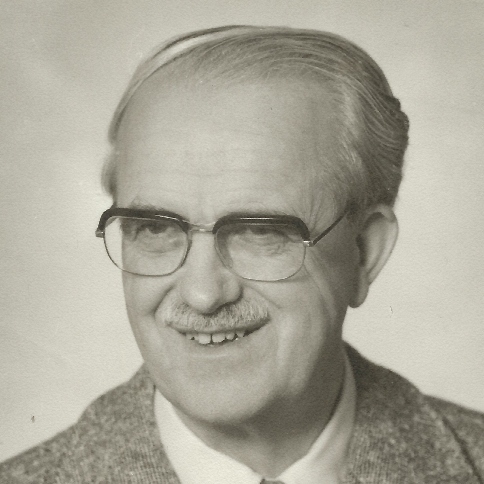
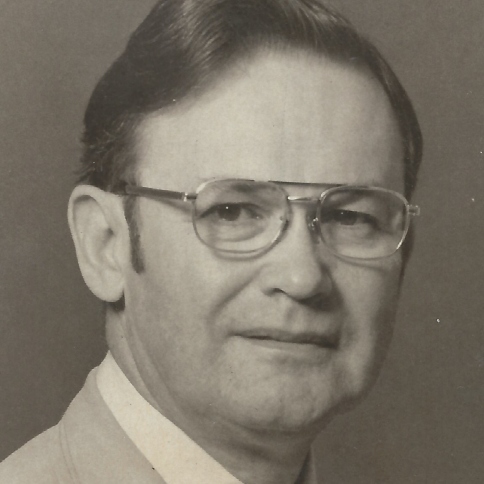
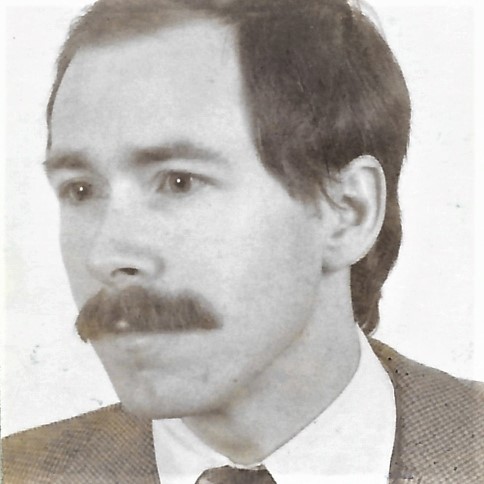
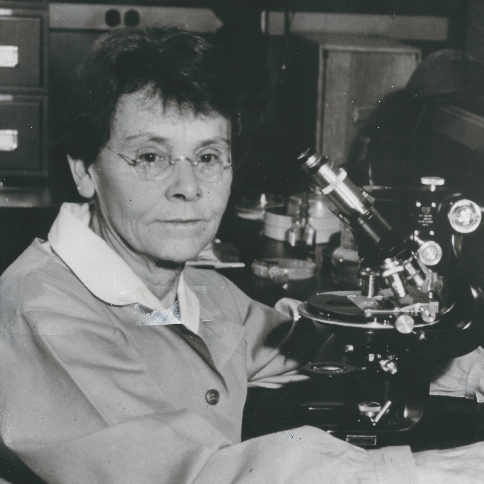
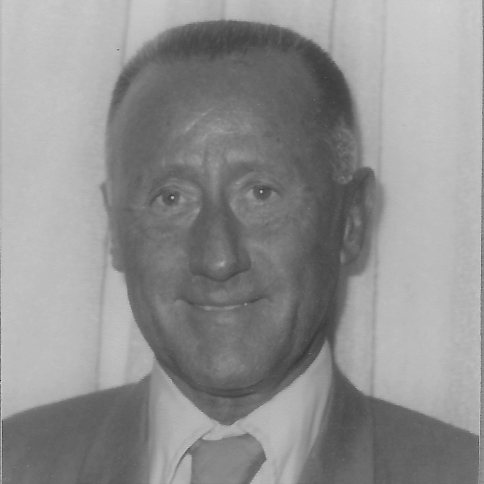
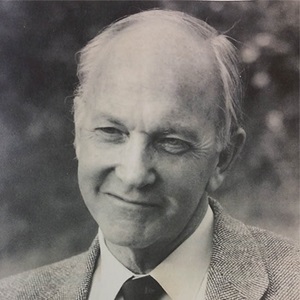
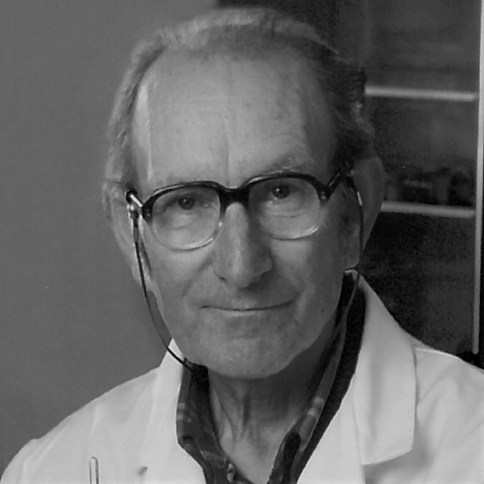
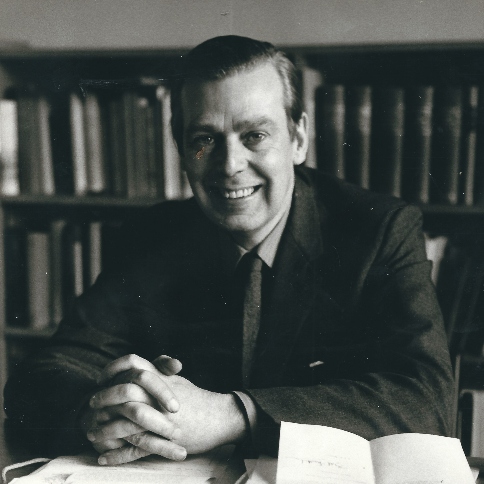
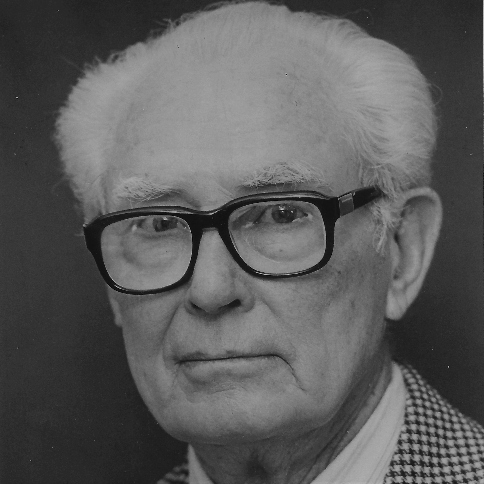
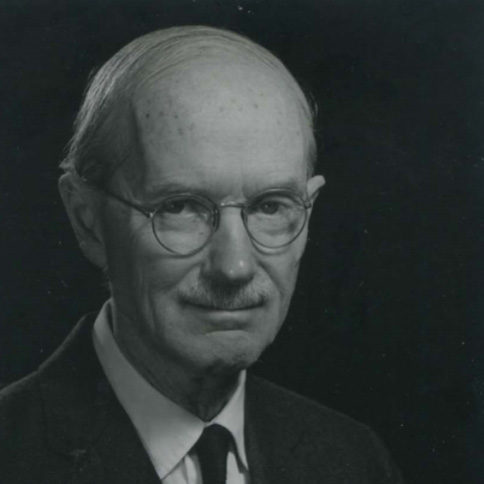
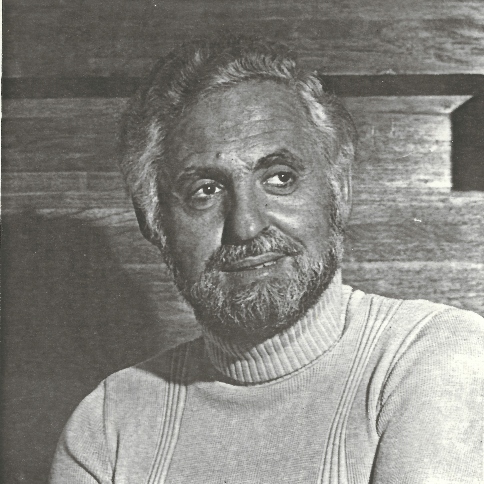
David Kazhdan
Wolf Prize Laureate in Mathematics 2026
David Kazhdan
Affiliation at the time of the award:
Tel Hebrew University of Jerusalem, Israel
Award citation:
“For foundational work on representation theory, automorphic forms and algebraic geometry, and their role in creating geometric representation theory”.
Prize share:
David Kazhdan
Joseph Bernstein
David Kazhdan and Joseph Bernstein fundamentally changed the way mathematicians understand the connections between different areas of mathematics. Their groundbreaking ideas created new bridges between algebra, geometry, and analysis, and helped lay the foundations of a major field in modern mathematics – geometric representation theory. The concepts and tools they developed have become cornerstones of mathematical research and continue to play a central role in addressing deep problems across many areas, from group theory to the Langlands program.
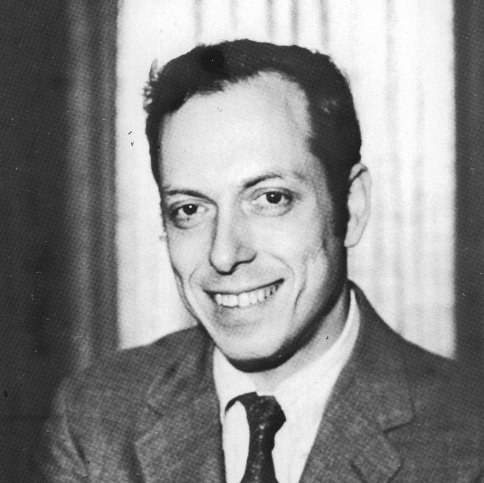
David Kazhdan, born in Moscow in 1946 to young academic parents, began his path to mathematics with an unusual bargain. At eleven, he asked to skip school one day a week; after chess failed to satisfy his parents as a serious pursuit, he chose mathematics. Studying with his grandfather, who had never attended high school, he raced through algebra, geometry, and trigonometry. Soon, Moscow’s vibrant mathematical circles – and weekly meetings with the legendary Israel Gelfand – opened what Kazhdan later called “the world of mathematics” to him.
Kazhdan is a mathematician of very wide-ranging interest. It can be said that Kazhdan works in representation theory and related areas, with the caveat that Kazhdan’s work shows that these related areas encompass all of mathematics. He became famous in his 20s by solving two central problems of Selberg regarding discrete subgroups of Lie groups at once using one extremely original idea: introducing a new property of groups now called Kazhdan’s property (T), using the topology of its space of irreducible representations. Since then, Kazhdan’s property (T) has been widely recognized as an extremely fundamental property of groups, with applications ranging from explicit construction of expanders to geometry and even logic. Kazhdan authored seminal work on the conjugates of Shimura varieties under arbitrary automorphisms of the complex numbers, showing that these conjugates are again Shimura varieties. This deep and difficult work is of foundational importance to the theory of Shimura varieties.
Kazhdan is one of the founders of geometric representation theory. His work with Lusztig, introducing what is now known as the Kazhdan-Lusztig basis and Kazhdan-Lusztig polynomials, is foundational to the subject. In this paper, they also formulated an important conjecture that Beilinson-Bernstein and Brylinski-Kashiwara proved a few years later. Kazhdan, together with Lusztig, proved the Deligne-Langlands conjecture on the classification of irreducible representations of the affine Hecke algebras. This work gave another major push to the development of geometric representation theory, and was also of great importance in automorphic forms and the Langlands program.
In a series of joint works, Kazhdan and Etingof constructed a universal quantization of Lie bialgebras. This resulted in solving almost all of the open problems on this subject posed by Drinfeld, and in the creation of a quantization theory for Lie bialgebras, which, intertwined with Kontsevich’s formality theory, lies at the foundation of modern deformation theory.
In recent years, Kazhdan continues to play a leading role in a surprisingly diverse range of problems, from supersymmetric quantum field theory and its mathematical ramifications to Ramsey theory and its surprising connections to algebraic geometry.