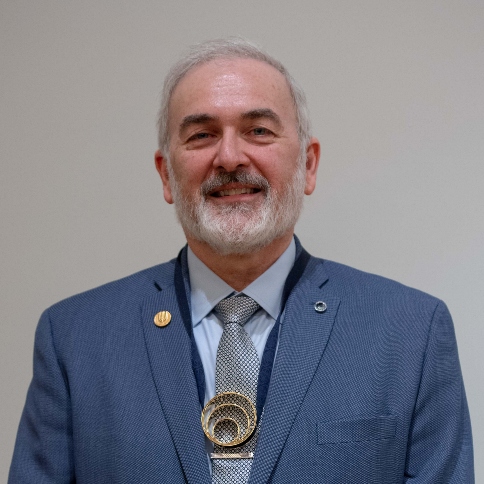
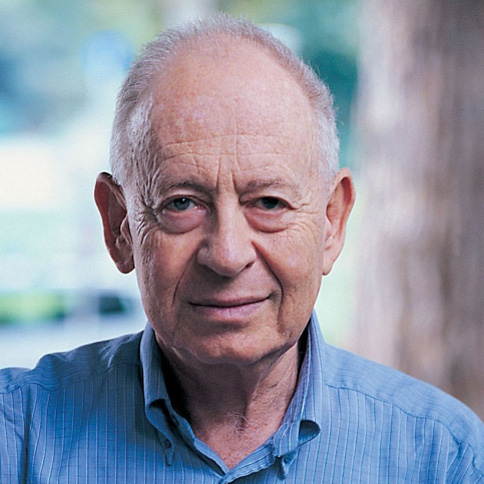
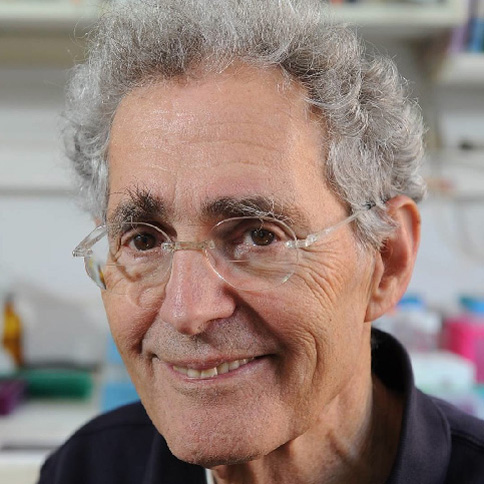
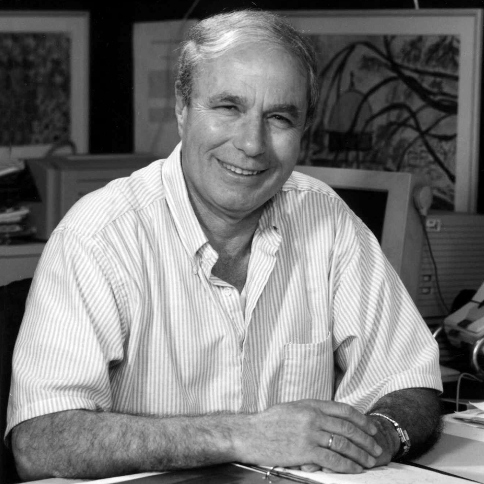
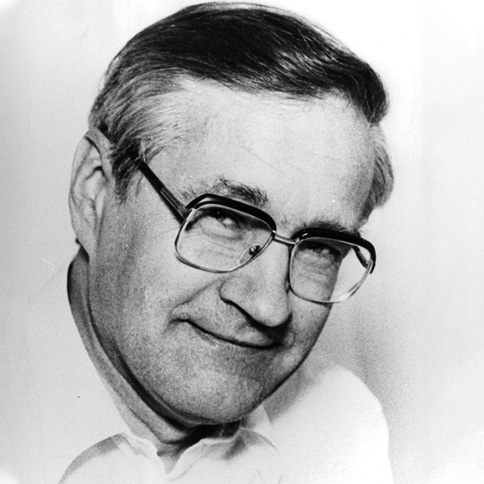
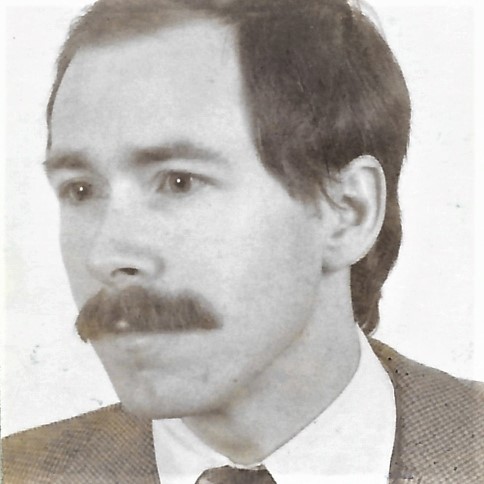
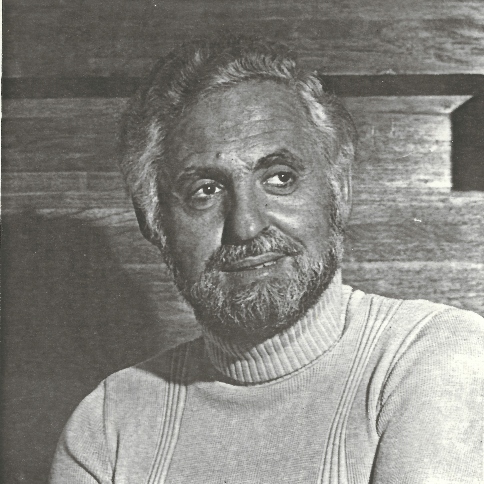
Joseph Bernstein
Wolf Prize Laureate in Mathematics 2026
Joseph Bernstein
Affiliation at the time of the award:
Tel Aviv University, Israel
Award citation:
“For foundational work on representation theory, automorphic forms and algebraic geometry, and their role in creating geometric representation theory”.
Prize share:
David Kazhdan
Joseph Bernstein
David Kazhdan and Joseph Bernstein fundamentally changed the way mathematicians understand the connections between different areas of mathematics. Their groundbreaking ideas created new bridges between algebra, geometry, and analysis, and helped lay the foundations of a major field in modern mathematics – geometric representation theory. The concepts and tools they developed have become cornerstones of mathematical research and continue to play a central role in addressing deep problems across many areas, from group theory to the Langlands program.
Joseph Bernstein, born in Moscow in 1945, encountered mathematics early through the intensely competitive world of Soviet mathematical Olympiads. He began competing in Moscow at fourteen and, at seventeen, won a gold medal at the International Mathematical Olympiad before entering Moscow State University. Bernstein later reflected that Olympiad training taught him ingenuity – but also initially gave him the misleading belief that a problem unsolved in five hours was impossible. Only later did he discover that serious questions might demand weeks, months, or even years.
Joseph Bernstein has reshaped many fields he has been involved in, most notably representation theory and the theory of automorphic forms.
Starting essentially with his Ph.D. at age 26, Bernstein developed an algebraic approach to differential operators with polynomial coefficients; in particular, he proved the analytic continuation of certain generalized functions, introducing what is now known as the Bernstein-Sato polynomial. This led him to his beautiful discovery of the theory of D-modules. In fact, D-modules became a crucial tool in diverse areas of mathematics, such as algebraic geometry, representation theory, and even logic.
Bernstein’s work with S. Gelfand and I. Gelfand on the category of highest weight modules over a complex semisimple Lie algebra was one of the main advances in representation theory after the discovery of the structure of finite-dimensional representations at the beginning of the 20th century. Further, jointly with Beilinson and Deligne, Bernstein discovered a topological counterpart of D-modules, which they called perverse sheaves; this is a fundamental tool in the study of singular spaces. In joint work with Beilinson, Bernstein related the theory of modules over such algebras to the theory of D-modules on the flag manifold, and proved the conjecture of Kazhdan and Lusztig – which describes, in particular, the characters of irreducible representations. These seminal works are part of what we now call geometric representation theory, of which Bernstein is one of the founders.
Bernstein has created foundations for representation theory of p-adic groups. Both the detailed study of the specific structure of representations of the general linear group and the fundamental concepts of the general theory – such as Bernstein’s center – are due to him, partly jointly with Zelevinsky. He has also had a great impact on the analytic theory of automorphic forms. He gave a different and very elegant approach to the analytic continuation and functional equations of Eisenstein series, based on a very general principle of analytic continuation. With Reznikov, he introduced the remarkable idea that one can bound L-functions by studying periods geometrically; this idea is central to many of the recent advances in the analytic theory of automorphic forms.
A distinctive characteristic of Bernstein’s work is his insistence on utter simplicity and clarity of both question and answer. This way of thinking itself has had a great influence on the community.